Product overview — who this stroller is and why it exists
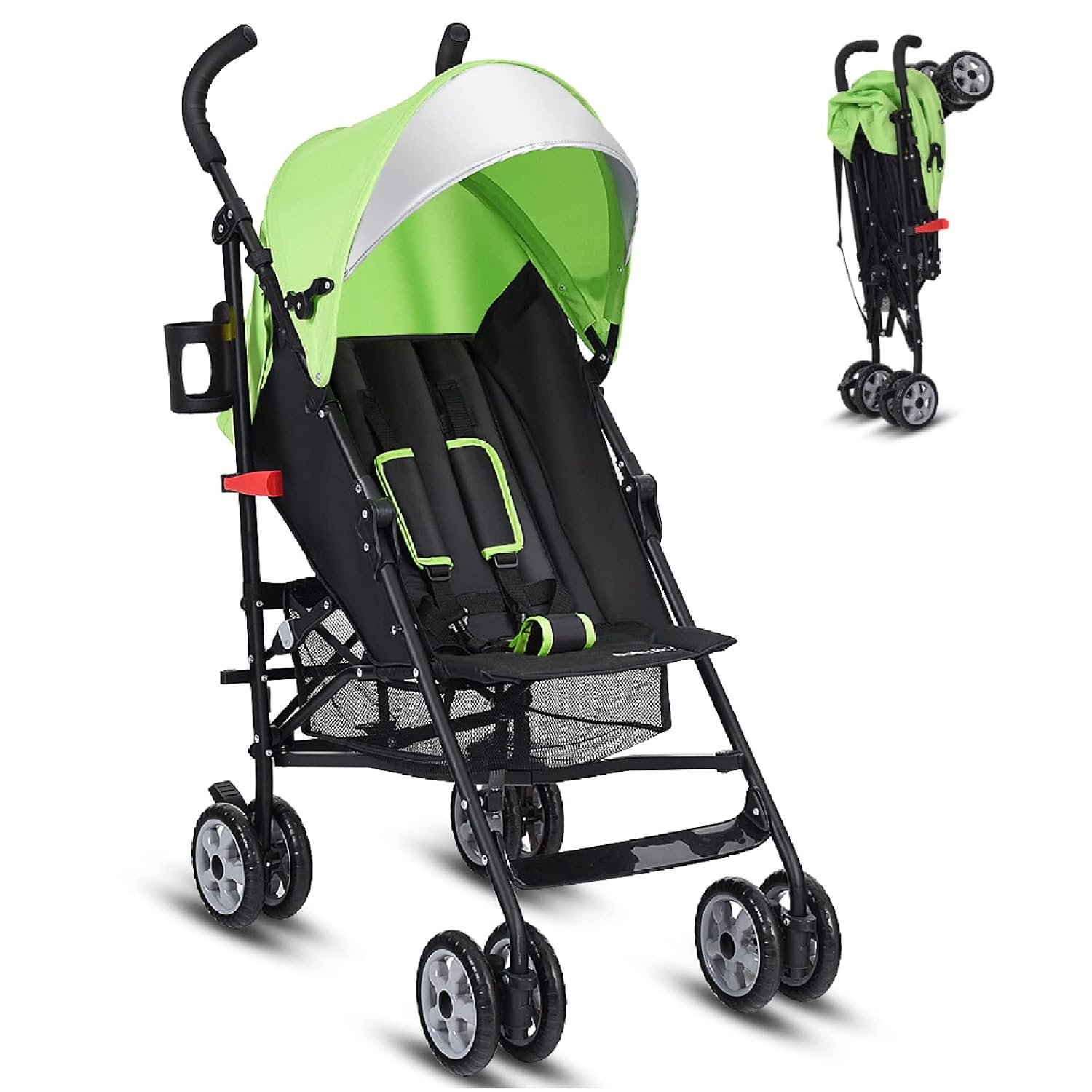
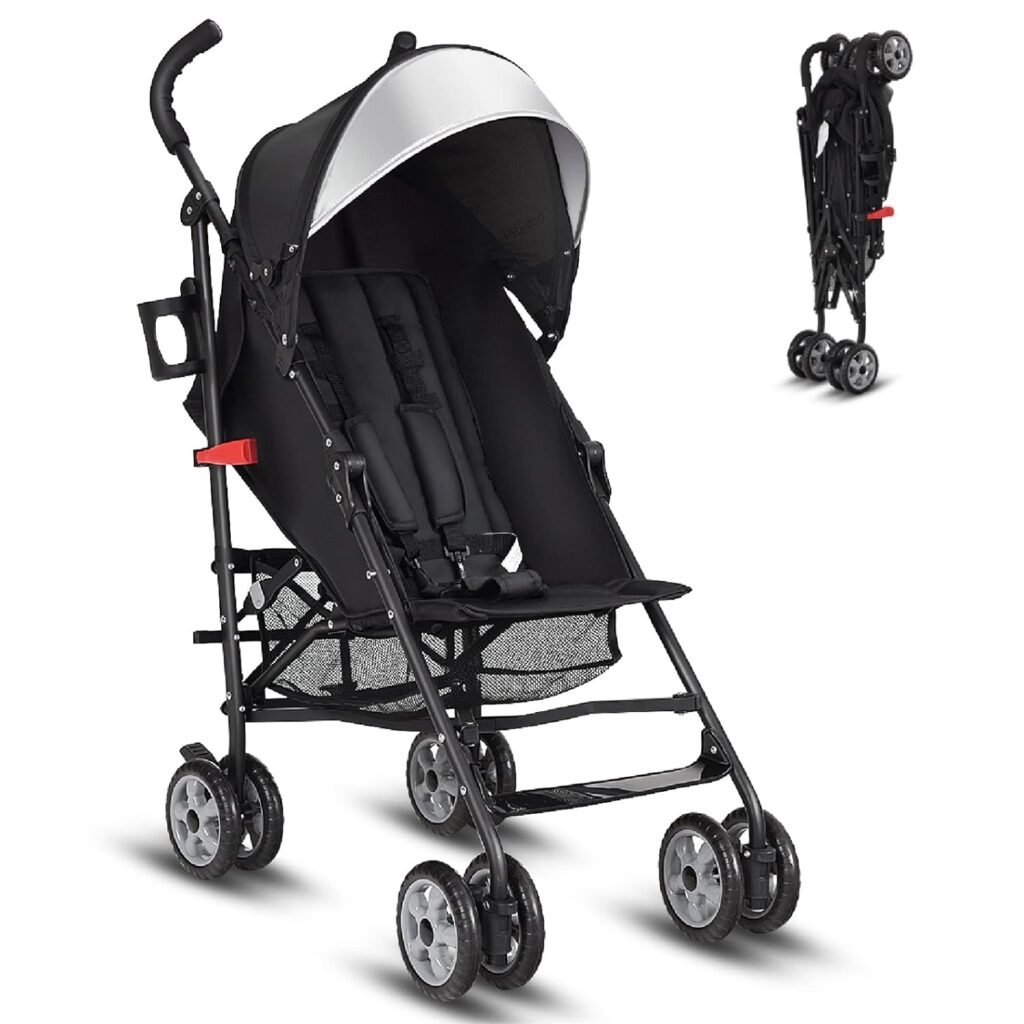
click here for strollers If your stroller needs to be light, fold fast, and not drain your wallet, the HONEY JOY Baby Lightweight Stroller is the compact travel stroller built for exactly that. In 2026, it undercuts most travel options on price while promising an airplane-friendly fold and the basics you actually need day to day. At $68.39 and In Stock, it’s aimed squarely at short trips, quick errands, and as a secondary or airline stroller you won’t stress over.
This review gives you a practical look at four things that matter: portability (whether it truly behaves like a compact travel stroller), safety & adjustability (harness, recline, canopy), ride & durability (wheels, frame, fabric), and value (what you get for $68.39). By the end, you’ll know if it fits your use case: toss-in-the-trunk convenience, gate-check ease, and fuss-free maintenance versus the trade-offs of a budget build.
Use the sections to make decisions quickly: portability helps you judge carry and fold; safety clarifies fit for your toddler; wheels/build explain where it rides best and how long it should last; and pricing shows where it stands against popular alternatives.

Key features deep-dive
Think of this as a hands-on inspection rather than ad copy. We’ll move feature by feature so you can decide if the design aligns with your travel routine and storage realities. The deep-dive is organized into four parts: portability (fold and carry), adjustability & safety (seat, harness, canopy), wheels & brakes (steering, stopping), and materials & durability (frame, fabric, long-term care). Each subsection calls out 1–2 concrete specs and gives practical, step-by-step usage tips.
If you’re testing in-store or at home, follow this quick triage to see if the stroller sticks:
- Fold/unfold: Collapse and re-open it twice; look for a positive lock when folded and no pinched fingers when opening.
- Adjust the seat: Move through the recline range and note if the backrest holds steady without sagging.
- Engage the brake: Step down once and try to push—wheels should not roll; release should be clean without scraping.
Portability & fold: how this compact travel stroller performs
The stroller weighs 12.5 pounds, which is lighter than many full-size options and in line with typical umbrella-style models that often sit between roughly 11–16 pounds. That matters when you’re carrying it up stairs, onto shuttles, or from curb to check-in—every pound saved helps when you’re juggling a diaper bag and a toddler.
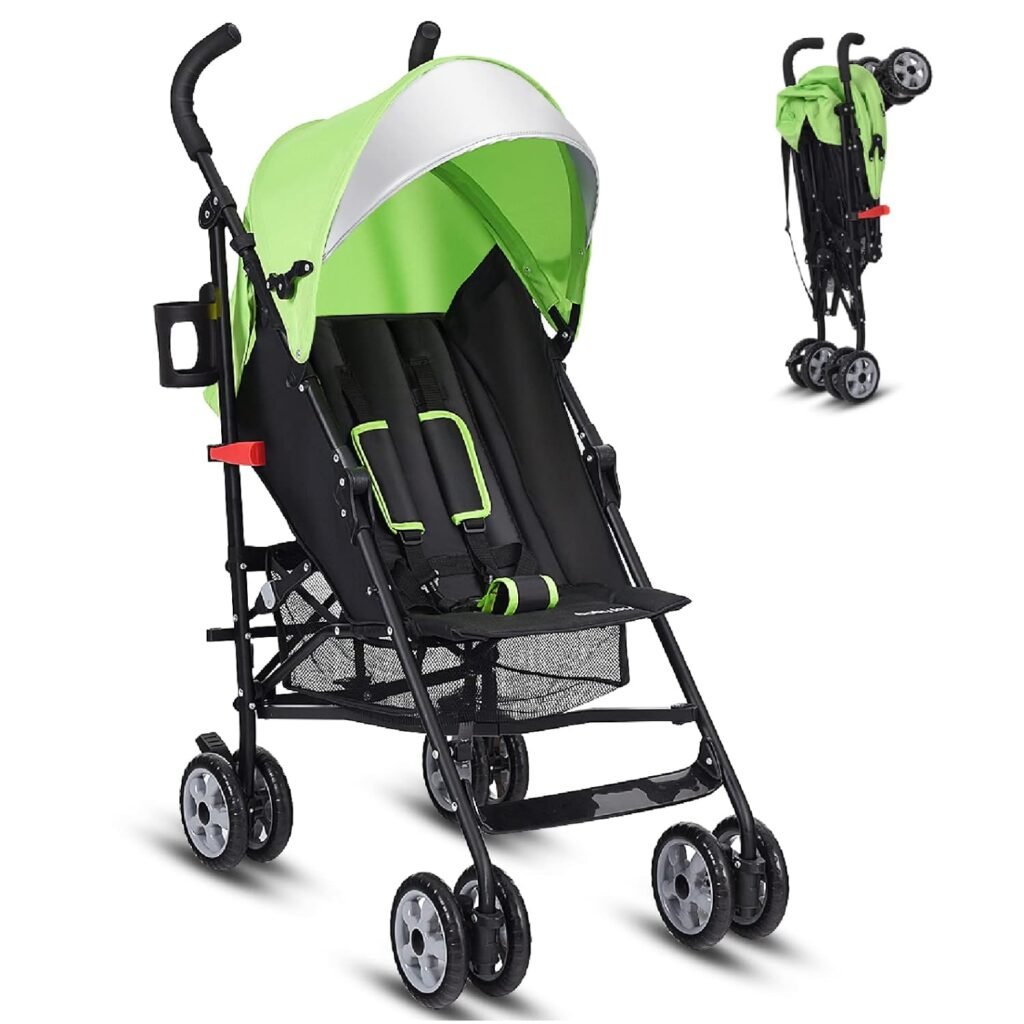
The fold is designed to go compact with a buckle that keeps it from springing open in your trunk or at the gate. It’s not advertised as a one-button magic trick, but with a bit of practice, the motion becomes repeatable and secure for travel days.
3-step fold/unfold checklist
- Prepare: Empty the basket and ensure the canopy is pulled back so fabric doesn’t catch.
- Fold: Activate the folding release, bring the frame together, then clip the safety buckle to lock the package.
- Unfold: Release the buckle, open the frame until you hear/feel the latch engage, and tug up gently on the handle to confirm it’s fully locked.
Before you fly:
- Check carry-on rules: Some airlines allow micro-fold strollers in the cabin, others require gate-check. Verify dimensions against your carrier’s policy.
- Confirm gate-check steps: Ask your airline how to tag the stroller and where to leave it at boarding; pick-up is usually jet bridge-side at arrival.
- Secure the fold: Make sure the safety buckle is clipped so baggage handlers aren’t dealing with a half-open stroller.
Real-world ergonomics are favorable: lifting into a trunk is straightforward thanks to the slim folded profile, and short carries through terminals are manageable. One-hand folding can be plausible when the seat is empty and you’ve practiced the sequence, though two hands will feel more reliable when you’re rushing.

Adjustability & safety: seat, harness and canopy
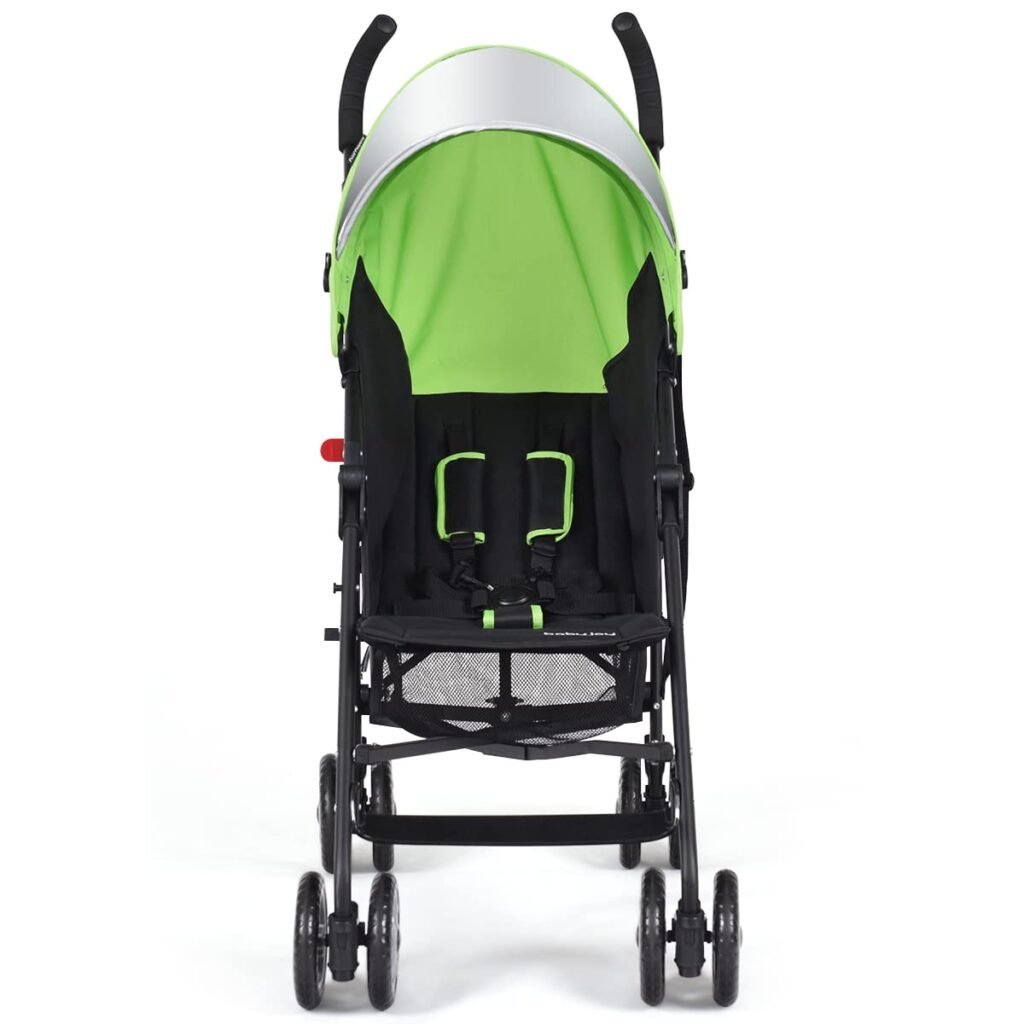
The HONEY JOY’s day-to-day usability hinges on three adjustable elements: a 5-position backrest, a 5-point harness, and a 3-section canopy. Those numbers translate into tangible comfort and security for quick errands and naps on the go.
Recline, harness, canopy — how to use them safely
- Reclining the backrest (5-position): Support the back with one hand and operate the recline adjuster with the other. Stop when you feel the detent for each position so the seat doesn’t drift over bumps.
- Harness fit (5-point): Buckle hips first, then shoulders, then the central clip. Tighten the straps until you can fit one finger between the harness and your child’s collarbone; the chest area should sit at armpit height.
- Canopy angle (3-section): Extend one or two sections for light shade; deploy all three for stronger sun or light rain, ensuring fabric isn’t stretched past its attachment points.
Safety checklist before each outing
- Inspect for fray or wear on harness webbing and confirm the buckle closes with an audible click.
- Verify the canopy’s attachment points are seated so wind can’t peel them back.
- Check the frame latch is fully engaged after unfolding; give the handle a light upward tug to confirm.
- Reassess strap length monthly to keep pace with a growing toddler so the harness remains snug and properly positioned.
Used correctly, these adjustments make the stroller more than just a compact travel stroller—they help you keep your child comfortable and contained while you shop, transfer, and queue.
Wheels, brakes & ride quality
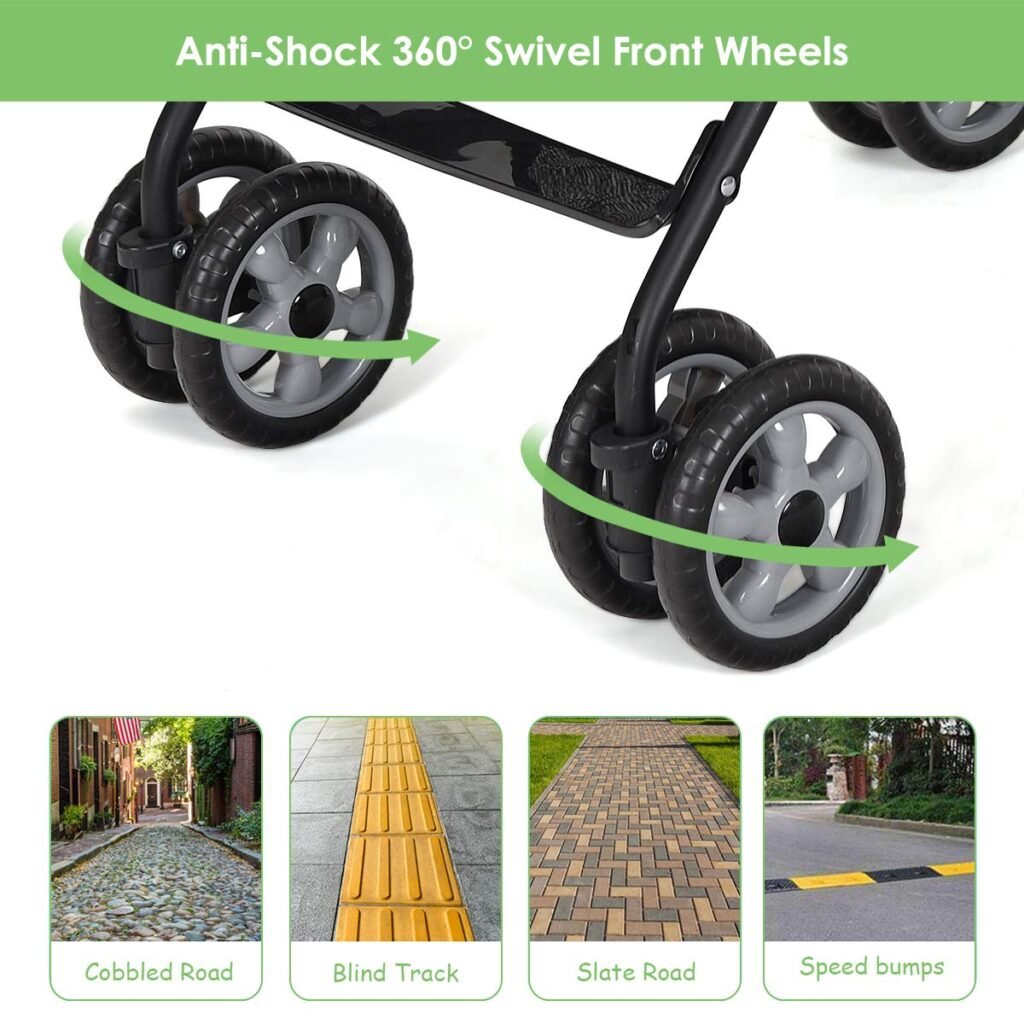
The front end runs on 6-inch EVA wheels with a lock-to-straight option, while the rear wheels use a foot-activated brake. On smooth sidewalks and mall floors, steering is light and predictable; on cobbles, locking the fronts straight reduces shimmy so you can push through without fighting the swivel.
5-minute on-the-job test
- Push test: Load a bag in the seat to simulate a child and push 50–100 feet on flat ground; it should track straight without constant correction.
- Turning radius: Do a slow U-turn and a quick to see how it pivots in tight aisles.
- Single-foot brake: Step down firmly—rear wheels should stop immediately; lift with your toe to release without shoe scraping.
Trade-offs to know: EVA wheels are lighter and require less upkeep than air-filled tires, which keeps overall weight and maintenance down. The flip side is a firmer ride over broken pavement, so you’ll feel more chatter on cracked sidewalks compared with larger, pneumatic-tire strollers.
Materials, build and durability
The chassis is an aluminum frame, chosen for stability, corrosion resistance, and weight savings, paired with a 300D Oxford fabric seat and canopy. Those materials make cleaning simple and help the stroller shrug off the odd rain splash or coffee drip without fuss.
Load capacity: The official maximum weight capacity is lbs. Keep the child’s weight within that limit and avoid overloading the basket with heavy items; toy and bag weight counts against handling but doesn’t change the official child limit. Retire the stroller once your toddler surpasses lbs or if they can’t be secured comfortably in the harness.
Maintenance routine
- Cleaning 300D fabric: Spot-clean with mild soap and water; avoid bleach. Remove crumbs/debris before wiping so grit doesn’t abrade the weave.
- Quarterly checks: Every months, inspect and gently tighten accessible fasteners, wheel caps, and hinge points.
- If you see corrosion: Dry thoroughly, apply a light protective spray suitable for aluminum, and contact the seller if any structural part shows pitting or cracking.
With periodic checks and gentle cleaning, you can stretch the usable life of this compact travel stroller well beyond a single trip season.
Storage, ergonomics and small extras
The convenience package is straightforward: a mesh basket underneath for quick access, an ergonomically shaped rubber handlebar for grip, and an included cup holder to keep a bottle handy. For a budget-friendly compact travel stroller, these small touches reduce how often you reach for your backpack.
What fits where
- Mesh basket: Diaper pouch, wipes, a folded change mat, snacks, and a light jacket. Keep heavy groceries up front in your hand instead of in the basket to maintain stability.
- Cup holder: Narrow baby bottles and standard water bottles usually sit best. Secure lids fully and avoid carbonated drinks when the route is bumpy.
Ergonomics checklist
- Handle height: Stand naturally behind the stroller; your elbows should bend slightly. If you’re hunching or reaching, it’s not your ideal height for long pushes.
- Rubber grip: The textured handle should reduce slippage and hand fatigue on longer walks compared with bare plastic.
- Load balance: Stow heavier items low and centered in the basket to keep steering neutral; avoid hanging bags from the handle to prevent tipping when the child hops out.
Pack smart and you’ll keep the stroller nimble while still having essentials on board.
What customers are saying — patterns from verified buyer feedback
Buyer feedback clusters around portability, cleaning ease, and price-to-performance. Many parents highlight how light it feels to carry and how compact the fold is for quick errands and airport days. Reviewers also mention the fabric wipes down quickly after snack time, a practical perk when you don’t want to remove covers.
Common critiques surface in three areas: seat padding feels minimal for longer naps, canopy coverage could be larger in strong sun, and the ride gets chattery on rough sidewalks. You’ll see recurring phrases like “lightweight to carry,” “folds down small,” and “canopy could be bigger.” Ratings and review counts change over time, so check the listing for the current average and total before you decide.
How to read the reviews effectively
- Look for consistency: If multiple recent reviews mention the same issue, treat it as a pattern rather than a one-off.
- Prioritize photos/videos: Visuals help confirm fold size, basket access, and how the harness sits on a real child.
- Scan seller responses: A timely, specific reply to concerns about parts or fit is a positive sign for after-sales support.
Used as intended—as a compact travel stroller for short trips—the balance of feedback trends positive on value and convenience for the price.
Who this stroller is for (and who should look elsewhere)
Best fit users include budget-minded travelers, parents who want an airline-friendly secondary stroller, and grandparents who prefer something light for short errands. If you need a compact travel stroller you won’t worry about gate-checking or tossing into a rideshare trunk, this profile fits.
Skip it if you plan frequent, long walks on rough terrain, want a newborn-ready flat-recline bassinet, or expect plush suspension. Those needs point to larger, more cushioned models with bigger wheels and advanced damping.
Three quick decision checks
- Trip frequency: Mostly errands and occasional flights? This stroller makes sense. Daily miles over broken pavement? Consider a more robust option.
- Child size: If your toddler is approaching higher weight ranges, a bigger stroller may give you more runway.
- Terrain: Smooth sidewalks and mall floors—yes. Regular cobbles and trails—look elsewhere.
If any check fails, consider stepping up to a model with enhanced suspension or a travel system that accepts a car seat for newborn needs.
Price, value assessment and alternatives
The HONEY JOY currently lists at $68.39 (down from $75.99), positioning it firmly in the budget travel segment. At this price, you’re paying for portability and the essentials rather than premium suspension, plush padding, or luxury fabrics.
How it compares
- Babyzen YOYO2: Advantage—refined build and a reputation for smoother steering. Why choose HONEY JOY anyway—dramatically lower price if you only need a simple compact travel stroller for short trips.
- GB Pockit: Advantage—an ultra-compact fold many travelers love for tight spaces. Why choose HONEY JOY anyway—more traditional stroller feel at a fraction of the cost when you don’t require a micro-fold.
When to pick HONEY JOY
- Short-trip specialist: You need a compact travel stroller for errands, daycare drop-offs, and quick flights.
- Infrequent use: It’s a backup for grandparents or occasional travel, so spending big doesn’t pencil out.
- Strict budget: You want reliable basics—secure harness, adjustable recline and canopy—without premium pricing.
When to invest more
- You walk long distances daily on cracked sidewalks or cobbles and want smoother suspension.
- You need a stroller that supports a higher child weight for longer use.
- You prefer extra padding, accessories, and brand-specific service networks.
Cost-per-use: a simple way to judge value
- Estimate your annual uses (e.g., outings).
- Divide price by uses: $68.39 ÷ ≈ $0.98 per outing.
- Compare that with a pricier stroller’s cost-per-use to see if upgrades are worth it for your mileage.
If your trips are short and occasional, the math usually favors this budget-friendly compact travel stroller.
Practical buying tips for a compact travel stroller and a short pre-purchase checklist
Before you click purchase, a fast hands-on once-over reduces surprises on delivery, and a few travel prep steps make flights smoother.
Pre-purchase checklist
- Measure storage spaces: Check your trunk and, if you plan cabin use, overhead bin space.
- Test the fold: Confirm you can lock and unlock the folded package without pinching fingers.
- Inspect harness and brakes: Ensure the buckle closes positively and the brake engages/releases cleanly.
- Review return policy: Know your return window in case fit or function isn’t as expected.
Warranty and first-48-hours routine
- Unbox carefully and verify all parts are present; keep packaging until you’ve completed a full function test.
- Document any missing parts or defects with photos and contact the seller promptly for replacements.
- Register your purchase if registration is offered to smooth any future support requests.
Travel tips specific to this umbrella-style stroller
- Gate-check like a pro: Ask for a gate-check tag at the desk or boarding; remove loose accessories and secure the fold buckle.
- Add a carry strap or sleeve: A simple strap or protective cover makes terminal walks easier and shields fabric from scuffs.
- Pack separately: Keep snacks, toys, and a change kit in a small backpack you can bring onboard; don’t leave valuables in the basket at the gate.
With a few minutes of prep, your compact travel stroller will be ready for errands, day trips, and stress-free gate checks.
Pros and Cons
Pros
- Very affordable travel option for quick trips and occasional flights
- Light to carry with a compact, secure fold for storage and transport
- Front-wheel lock and rear foot brake add control in busy areas
- Under-seat mesh basket and included cup holder add everyday convenience
- Ergonomic rubber handle offers a comfortable, non-slip grip
Cons
- Ride can feel firm on rough surfaces compared with air-filled tire strollers
- Seat cushioning and canopy coverage are modest versus premium models
- Outgrown sooner than larger strollers designed for higher child weight ranges
- One-hand fold isn’t guaranteed; it may require two hands depending on angle and load
Final Verdict
Key Takeaways
- A true budget buy at $68.39, built for errands, day trips, and flights rather than long, rough walks.
- Fold is compact with a safety buckle; practice the sequence for smoother one- or two-hand operation on travel days.
- Adjustability covers essentials: 5-position backrest, 5-point harness, and a 3-section canopy for shade or light rain.
- Ride and handling suit smooth sidewalks and malls; rough pavement feels firmer than on larger pneumatic-tire strollers.
- Choose it when you need a compact travel stroller for occasional use; step up to pricier models for higher weight ranges or suspension.
Frequently Asked Questions
Is Joolz better than Bugaboo?
Neither is universally “better.” Joolz and Bugaboo are both premium brands with different strengths. Bugaboo typically emphasizes modularity and suspension, while Joolz often focuses on sleek design and lightweight convenience. Choose based on your terrain, fold/weight needs, and which accessories you value most.
What is the lightest most compact travel stroller?
Models frequently cited for being extremely light and tiny when folded include the GB Pockit series and other micro-fold strollers. Specs change over time, so check current folded dimensions and weight on the product page to confirm they meet your airline or storage requirements.
Can you take Bugaboo Dragonfly on a plane?
You can usually take the Bugaboo Dragonfly to the gate and have it gate-checked, as most airlines permit strollers. Whether it fits in the cabin overhead depends on its folded size versus your airline’s carry-on limits. Always verify the latest rules with your carrier before traveling.
Is the Bugaboo Dragonfly cabin approved?
There’s no universal “cabin approved” certification for strollers. Whether the Bugaboo Dragonfly can go in the overhead bin depends on your airline’s carry-on size rules and the stroller’s folded dimensions. Check both and confirm with the airline for the final word.
Disclosure: As an Amazon Associate, I earn from qualifying purchases.