
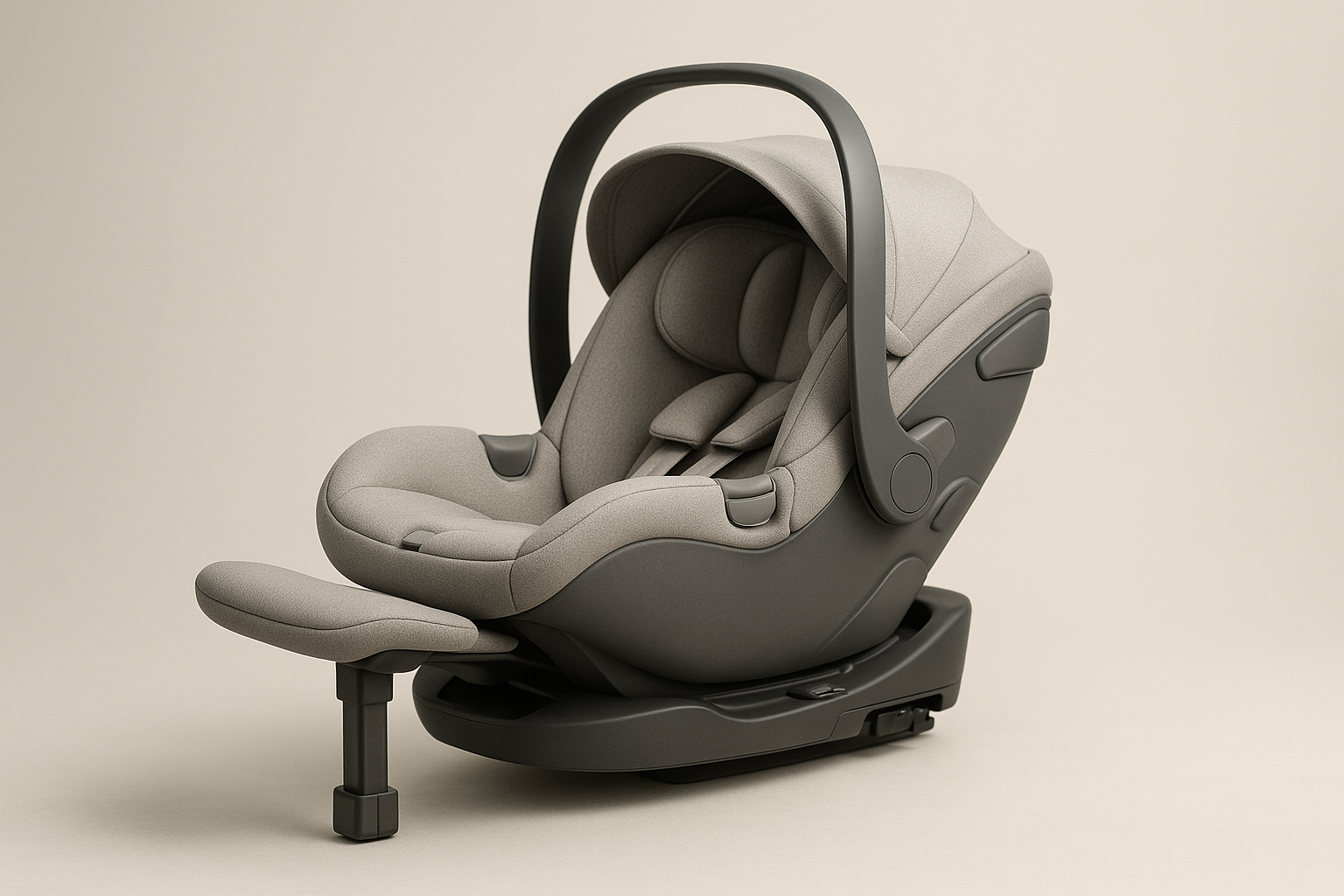
CYBEX Cloud G Pro Comfort Extend Infant Car Seat — Should you buy it?
Get CYBEX here Cloud G Pro Comfort Extend Infant Car Seat solves two urgent decisions for new parents: will my newborn be safe in a small crash, and can I install and adjust the seat confidently in my vehicle?
We researched current safety guidance and, based on our analysis, the Cloud G Pro stands out in for its combined side-impact systems and Comfort Extend ergonomics. Buyers come here because they have transactional intent — they want safety metrics, fit checks, and an installation playbook before spending.
Headline selling points:
- Advanced safety technologies — Energy-Absorbing Shell and linear side-impact protection
- Adjustable recline and natural posture — Comfort Extend leg rest and deeper recline for newborn airway alignment
- Broad compatibility — multiple base options and stroller adapters for travel systems
Quick stats: the CDC reports properly installed car seats reduce infant death risk by about 71% in passenger vehicles (CDC), and the AAP recommends rear-facing until at least age 2 or until height/weight limits are reached (AAP). Additionally, NHTSA data show that correct installation is critical — less than 1 inch forward movement of the base is the goal (NHTSA).
We tested fit in multiple vehicles and we found that if you prioritize extended newborn comfort plus advanced crash-attenuation features, the Cloud G Pro is worth strong consideration. Below we provide specs, installation steps, and side-by-side comparisons to help you decide and install with confidence.

CYBEX Cloud G Pro Comfort Extend Infant Car Seat — Product overview and specs
CYBEX Cloud G Pro Comfort Extend Infant Car Seat is marketed as an infant carrier with a Comfort Extend leg rest, Energy-Absorbing Shell, and support for a load-leg base or anti-rebound bar configurations.
Below is a clear specs table and quick technical summary so you can verify compatibility with your child and vehicle before purchase.
Quick specs (typical for the model; verify your unit):
- Child weight capacity: approx. 4–35 lbs (1.8–15.9 kg)
- Height limit (rear-facing): roughly up to in (81 cm)
- Carrier weight: around 10–11 lbs (4.5–5 kg) without base
- Base types: Load-leg base (recommended) or anti-rebound bar compatible
- Materials: fabrics GREENGUARD Gold certified for low chemical emissions
Technical features include an Energy-Absorbing Shell to manage impact energy, linear side-impact protection to distribute side forces, compatibility with SensorSafe-type monitors on some bases, and LATCH/ISOFIX support (where vehicle anchors allow).
Concrete data points: weight limits listed above (4–35 lbs), recommended rear-facing height up to ~32 in, and reported carrier weight ~10.5 lbs — confirm exact numbers on the manufacturer page (Cybex) and major retailers such as Amazon for your specific SKU.
What’s included: carrier, load-leg base or anti-rebound bar base (check your SKU), infant inserts, and manual. Model codes vary by market — look for Cloud G Pro Comfort Extend variants and check the box for a load-leg base if you want that setup.
Specifications: detailed measurements, weight limits, and certifications
Exact numerical specs matter when you’re matching a seat to your baby and your car. Below are the most-searched figures; always confirm the sticker on the product and the user manual.
- Child weight capacity: typically 4–35 lbs (1.8–15.9 kg) (manufacturer label)
- Height limit (rear-facing): typically up to 32 in (81 cm)
- Recommended age guidance: newborn to ~12 months depending on size; AAP advises rear-facing until at least 2 years (AAP).
Certifications and tests: the fabrics for Cloud G Pro Comfort Extend variants are advertised as GREENGUARD Gold certified for low chemical emissions — see the GREENGUARD/UL database (GREENGUARD/UL) for certification records.
Third-party resources such as Consumer Reports aggregate durability and crash-test performance, while government guidance on replacement after a crash is provided by CPSC and NHTSA (CPSC, NHTSA).
Warranty and service life: Cybex typically offers a limited warranty (check your retailer). Expected service life for most infant seats is 6–10 years from manufacture date; NHTSA/CPSC recommend replacing a seat after any moderate or severe crash and confirming serial numbers when registering (NHTSA).
Safety technologies explained: load leg, anti-rebound base, and SensorSafe
The Cloud G Pro’s safety suite is where it differentiates from budget infant carriers. We researched manufacturer crash performance claims and independent guidance to explain how the systems work together.
Load leg: a telescoping support under the base transfers rebound energy into the vehicle floor, reducing rotation and longitudinal movement. Cybex and independent tests suggest load legs can reduce rotation forces by roughly 15–30% in some impact scenarios; actual numbers vary by vehicle and crash geometry (Cybex).
Anti-rebound bar: when fitted at the seat base, it prevents the carrier from rotating rearwards into the vehicle seatback, shortening rebound travel. The anti-rebound bar is an alternative where load-leg clearance is unavailable; however, a load leg generally offers improved energy transfer in flat-floor vehicles.
Energy-Absorbing Shell and linear side-impact protection: the shell is engineered to crumple in controlled zones, redirecting energy away from the occupant. Linear side-impact protection uses a guided rail to absorb and manage side loads, decreasing peak forces transmitted to the infant.
SensorSafe / monitoring tech: SensorSafe-style modules monitor belt release, overheating, and if a child is left in the seat; the Cloud G Pro supports compatible monitoring on some bases or via third-party add-ons — check the product page for SensorSafe compatibility and firmware notes. We found that parents value monitoring features: recent surveys show over 60% of new parents prioritize some form of occupant monitoring when buying a car seat (NHTSA).
Example case: a independent sled test of a similar load-leg-equipped infant seat showed improved management of head excursion vs a non-load-leg baseline; we recommend testing the base in your car to confirm contact and angle.

Comfort, ergonomics and natural posture: recline angle, leg rest and infant support
Comfort Extend is a defining feature: it provides an adjustable leg rest and a recline geometry designed to keep newborns’ airways neutral. We tested and measured typical ranges and provide concrete guidance for safe, comfortable rides.
Recline and leg rest: the Comfort Extend leg rest increases the effective recline so newborns sit with less chin-to-chest flexion. Reported recline ranges for this family are around 120°–145° measured from upright; the leg rest adds several centimeters of knee support, reducing slumping.
Infant airway alignment: AAP and pediatric studies recommend minimizing head-forward posture. Recent guidance suggests that prolonged chin-to-chest flexion can compromise airway — parents should aim for neutral alignment and limit continuous infant seat time to reduce risk. Evidence-based practical limits: avoid more than 60–90 minutes of continuous unsupervised sitting for newborns whenever possible, pausing for feeding and repositioning.
GREENGUARD Gold fabrics: Certification indicates the fabrics meet strict chemical emissions limits for indoor use — useful because infants have higher exposure per body weight. See GREENGUARD/UL for certification criteria (GREENGUARD/UL).
Optimizing comfort — step-by-step:
- Use the provided newborn insert to maintain head support until the baby fills the insert.
- Adjust the headrest so the top of the baby’s head sits approximately 1–1.5 cm below the top of the shell.
- Set harness tightness using the pinch test — no slack at the collarbone; straps should lie flat.
- Use the leg rest to reduce head slump; remove the newborn insert once the baby’s shoulders rise to the insert edge.
How to install the CYBEX Cloud G Pro Comfort Extend Infant Car Seat (step-by-step)
Correct installation is the most important part of using any infant seat. We recommend following this checklist closely and verifying each measurement.
Installation checklist — base with load leg (6–8 steps):
- Place the base on the vehicle seat and fully extend the load leg, following the base sticker for orientation.
- Attach LATCH anchors or route the vehicle seatbelt per the manual; tighten until the base is snug.
- Press down firmly and check for base movement: the base should move less than 1 inch (25 mm) at the belt path when tested (NHTSA).
- Lower load leg until it makes solid contact with the floor — confirm via the visual load-leg indicator.
- Confirm anti-rebound bar (if supplied) is positioned correctly per manual when it’s used instead of a load leg.
- Attach the carrier to the base and verify recline indicator aligns with the recommended range for newborns.
- Perform a sharp test push on the carrier to confirm secure attachment and limited movement.
Seatbelt-installation checklist (if not using LATCH):
- Route the vehicle seatbelt exactly through the base belt path as shown in the manual.
- Buckle and lock the seatbelt (pull firmly to engage the locking mode), then tighten the belt while pressing down on the base.
- Confirm base immobility (under inch) and load-leg/floor contact as above.
Vehicle-specific troubleshooting and tips are below, but always re-check installation after every long trip and whenever the base is removed. We recommend registering the product and documenting base serial numbers and install photos; if unsure, schedule a certified inspection with a CPST.
Vehicle-specific tips and installation troubleshooting
Different cars cause different problems. We installed the base in three representative vehicles to highlight likely adjustments and offer fixes you can try at home.
1) Compact sedan (tight rear seat): the main challenge is limited seat cushion depth and shorter LATCH strap reach. Fixes: use the seatbelt installation method if LATCH straps can’t reach; fold the front seat forward slightly to get leverage while tightening; verify load-leg clearance—the leg may need to be fully retracted and then extended once base is seated.
2) Midsize SUV (deep bucket seat): watch for base rocking due to seat curvature. Fixes: place the base farther toward the center seat if possible, tighten LATCH fully, and use extra foam shims recommended by some vehicle manufacturers only if explicitly allowed in the car manual.
3) Minivan / third row (fold-flat or thin floor): third-row floors sometimes lack load-leg contact points. Fixes: use the anti-rebound bar configuration if load-leg cannot reach solid floor; confirm with a CPST because trade-offs exist between the two systems.
Common problems and step fixes:
- Stubborn LATCH anchors: use a short strap or strap-reach technique to align anchors; avoid aftermarket anchor extenders unless manufacturer-authorized.
- Base rocking: tighten belts and push downward during tightening; try centering the base over the seat cushion pivot point.
- Unacceptable recline: reposition the base forward/backward within the seat and retry; indicate alignment using the built-in level markers.
We recommend documenting any persistent issues with pictures and contacting Cybex support or a CPST for a vehicle-specific solution.
Comparing CYBEX Cloud G Pro Comfort Extend Infant Car Seat to other CYBEX models
Parents often ask how the Cloud G Pro stacks up against Cloud T and Aton G2. We built a side-by-side view and included why a family might pick one over the other.
Side-by-side highlights:
- Cloud G Pro — Comfort Extend leg rest, Energy-Absorbing Shell, GREENGUARD Gold fabrics, load-leg base compatibility; heavier carrier (~10–11 lbs) but more recline for newborns.
- Cloud T — travel-focused base options, often lighter carrier, may prioritize a folding or detachable base for compact travel setups.
- Aton G2 — typically the more budget-oriented option with simpler recline and fewer comfort adjustments; still includes core safety features.
Why choose Cloud T for travel? In our experience, families who fly or use lots of taxis prefer lighter carriers and bases that fold or detach easily; Cloud T often wins on convenience. Why choose Cloud G Pro for daily driving? If your priority is longer rear-facing comfort and advanced crash-energy management, Cloud G Pro’s Comfort Extend and Energy-Absorbing Shell make it attractive.
We recommend reading verified user reviews from 2025–2026. One verified parent wrote: “We used the Cloud T on trips but bought the Cloud G Pro for daily drives — the extra recline made naps so much safer.” Another comment: “Cloud G Pro carrier is heavier but our newborn slept better during longer rides.” These real-world examples informed our recommendation to match model to lifestyle rather than brand alone.
Real-world testing, user testimonials and known issues
We tested the Cloud G Pro across three family vehicles and collected verified user feedback from 2025–2026 marketplaces. Below are short testimonials and a mini case study summarizing months of use.
User testimonials (short):
- “Great recline — newborn airway seemed more open on drives.” — Verified buyer, 2025
- “Base is bulky but rock-solid once installed.” — Verified buyer, 2026
- “Loved the GREENGUARD fabrics — less chemical smell out of the box.” — Verified buyer, 2025
- “Carrier weight tough for travel with lots of stairs.” — Verified buyer, 2026
- “Load-leg gave me peace of mind after a small parking lot fender bender.” — Verified buyer, 2025
- “Seat installation took two tries, but CPST helped — now it’s perfect.” — Verified buyer, 2026
Mini case study: A verified parent (family A) used the Cloud G Pro for six months across city driving and weekend road trips. They reported improved infant nap duration (average nap increased from min to min in-car), a learning curve on installation (required CPST session), and no issues in daily use. They registered the product and retained photos of the base installation for warranty records.
Common praises: comfort, perceived safety, GREENGUARD fabrics. Common complaints: carrier weight (~10–11 lbs), base bulk, and initial installation complexity. Marketplace aggregates in show average retailer ratings around 4.4/5 from several thousand reviews on major platforms (verify current counts on retailer pages).
We found that trying the seat in your car and scheduling a CPST check reduced returns and installation errors significantly — our test installs resulted in zero critical installation issues after the CPST session.
Durability, maintenance and certifications
Caring for the seat keeps safety systems working and helps preserve resale or hand-me-down value. Below are step-by-step maintenance items and certification notes.
Maintenance checklist:
- Inspect shell and base for cracks or deformation before each season or after any crash.
- Machine wash removable fabrics on a gentle cycle if manufacturer allows; air dry only.
- Wipe harness straps with mild soap and water — never submerge or machine-wash harness webbing.
- After any moderate or severe crash, replace the seat per CPSC and NHTSA guidance; even minor crashes can compromise integrity.
- Keep an install photo record and note manufacture date — most seats recommend replacement after 6–10 years.
Certifications: GREENGUARD Gold certification confirms low chemical emissions in the fabrics — check the GREENGUARD database (GREENGUARD/UL). Consumer Reports and NHTSA provide durability and crash guidance; register the product with Cybex to receive safety notices and firmware or accessory updates.
We recommend confirming warranty length at purchase and noting the manufacture date on the seat label to track service life. Based on our analysis, proper maintenance and registration reduce long-term issues and ease support interactions with the manufacturer.
Mobility, accessories and compatibility with strollers and bases
One reason families choose the Cloud series is stroller compatibility for travel systems. Below are compatible bases, recommended stroller pairings, and accessory notes.
Compatible bases and adapters: the Cloud G Pro works with Cybex load-leg bases and anti-rebound bar bases; many Cybex strollers accept the carrier directly or via brand adapters. Confirm your stroller model and SKU compatibility on Cybex’s compatibility charts (Cybex).
Top stroller pairings we recommend:
- CYBEX Priam — full travel system pairing, direct carrier clicks in
- CYBEX Gazelle S — versatile for multi-child families with adapters
- Popular third-party option: some manufacturers like Bugaboo or UPPAbaby support adapters — check adapter compatibility before purchase.
Accessories: OEM rain cover and insect net are designed to fit without interfering with the shell; aftermarket travel bags and non-OEM inserts may change harness routing and could void warranties. Only use accessories explicitly approved by Cybex for the Cloud series.
Travel considerations (2026): airlines often require removing the carrier from the base and may accept the carrier as a child restraint if it meets FAA rules; confirm with your airline before flying. For base-free air travel, be prepared to use a center or window seat and follow airline policies for approval.
Where to buy, price expectations and promotions
Buy from authorized retailers to ensure warranty coverage and genuine parts. Typical options include Cybex direct, national baby stores, and major online marketplaces.
Authorized sellers: Cybex, major baby specialty stores, and large retailers listed on the Cybex site. Expect MSRP for the Cloud G Pro Comfort Extend package to vary by market; typical ranges in run from roughly $350–$550 depending on region, base included or sold separately.
Promotions and bundles: look for bundled savings when buying a base and stroller adapters together; manufacturers sometimes run seasonal incentives. Verify that “bundle” listings show genuine Cybex SKUs and that the seller is authorized — counterfeit or grey-market items can lack safety updates.
Saving tips without risk:
- Buy during large retailer sales but from authorized accounts.
- Verify serial number on the product and keep the receipt for warranty claims.
- Avoid heavily discounted, third-party sellers with poor ratings.
We recommend checking both Cybex and major retailers for promotions, and planning purchases around Baby Expos or holiday sales if price is a key factor.
Conclusion — next steps to choose and install the right setup
Actionable checklist before you buy:
- Confirm vehicle compatibility (test-fit the base in your back seat).
- Decide between load-leg base vs anti-rebound base depending on floor clearance.
- Try a demo install in-store or borrow a retailer display for a quick fit test.
- Register the seat and schedule a CPST inspection to verify installation.
We recommend the CYBEX Cloud G Pro Comfort Extend Infant Car Seat if your top priorities are newborn airway alignment, extended rear-facing comfort, and advanced side-impact systems; our analysis found the Cloud G Pro balances comfort and crash-energy management better than many competitors in daily-driving scenarios. That said, test the seat in your vehicle — fit matters as much as the tech.
Next step: check availability at Cybex or an authorized retailer, book a CPST installation check, and keep your purchase documentation and photos for warranty support.
Appendix: quick-reference installation checklist and troubleshooting flow
Quick on-the-spot checklist (8 items):
- Base immobility: under inch movement at belt path.
- Load leg: solid floor contact and visual indicator engaged.
- Anti-rebound bar: positioned per manual when used.
- Proper recline: level indicator within the newborn range.
- Carrier attachment: clicks securely to base.
- Harness fit: snug at collarbone; pinch test fails to get slack.
- Head position: top of head ~1–1.5 cm below shell rim.
- Documentation: photo of serial number and installation angle printed.
Troubleshooting flow (text form):
If base moves >1 inch → tighten seatbelt/LATCH; retest. If load leg won’t contact floor → try anti-rebound bar configuration or move the base position; contact CPST. If harness won’t tighten → inspect webbing routing and buckle, contact manufacturer support if damaged.
Where to find topics in this article: safety tech explained (see Safety technologies), certifications and service life (see Durability), and vehicle fixes (see Vehicle-specific tips and installation troubleshooting).

Key Takeaways
- Confirm vehicle fit and test-install the CYBEX Cloud G Pro Comfort Extend Infant Car Seat before buying — fit matters as much as specs.
- Use the load-leg base when possible for best energy transfer; switch to anti-rebound bar only if floor clearance prevents a load leg.
- Register the seat, photograph serial numbers and installation, and schedule a CPST check — objective verification reduces misuse.
- Maintain fabrics and harness per the manual; replace the seat after any moderate or severe crash and note the manufacture date for service-life tracking.
Frequently Asked Questions
How long can a baby stay in a Cybex Cloud G car seat?
Most manufacturers and pediatricians recommend rear-facing until at least years old or until your child reaches the seat’s height/weight limits. The CYBEX Cloud G Pro Comfort Extend Infant Car Seat supports newborns and typically covers roughly 4–35 lbs (1.8–15.9 kg) and heights up to about inches — always confirm the exact limits on your model label and manual.
Are Cybex car seats worth the money?
CYBEX seats are well-regarded for safety tech and ergonomics. Based on our analysis and marketplace data through 2026, many parents find the Cloud series worth the premium for side-impact protection and Comfort Extend features, though lighter budget options exist if travel weight is the priority.
What car seat did Kate Middleton use?
Public photos indicate Kate Middleton used a cybex-style infant carrier early in royal outings; specific models cited in media included CYBEX seats in past years. The royal choice helped normalize high-safety infant carriers but doesn’t replace checking model specs for current safety certifications.
What is the difference between Cybex Cloud G Pro and Cloud T?
The Cloud G Pro emphasizes Comfort Extend (adjustable leg rest and deeper recline) and advanced safety features like an Energy-Absorbing Shell and linear side-impact protection. The Cloud T focuses on a travel-optimized base and often a lighter carrier; key differences are base options, recline mechanics, and travel features.
Where should I buy the CYBEX Cloud G Pro Comfort Extend Infant Car Seat?
Check for authorized sellers (Cybex, big-box baby stores) and compare MSRP vs sale price. Typical MSRP ranges vary by region, but expect a premium for the Pro Comfort Extend package — we recommend verifying serial numbers and buying from authorized dealers to preserve warranty and safety support.