
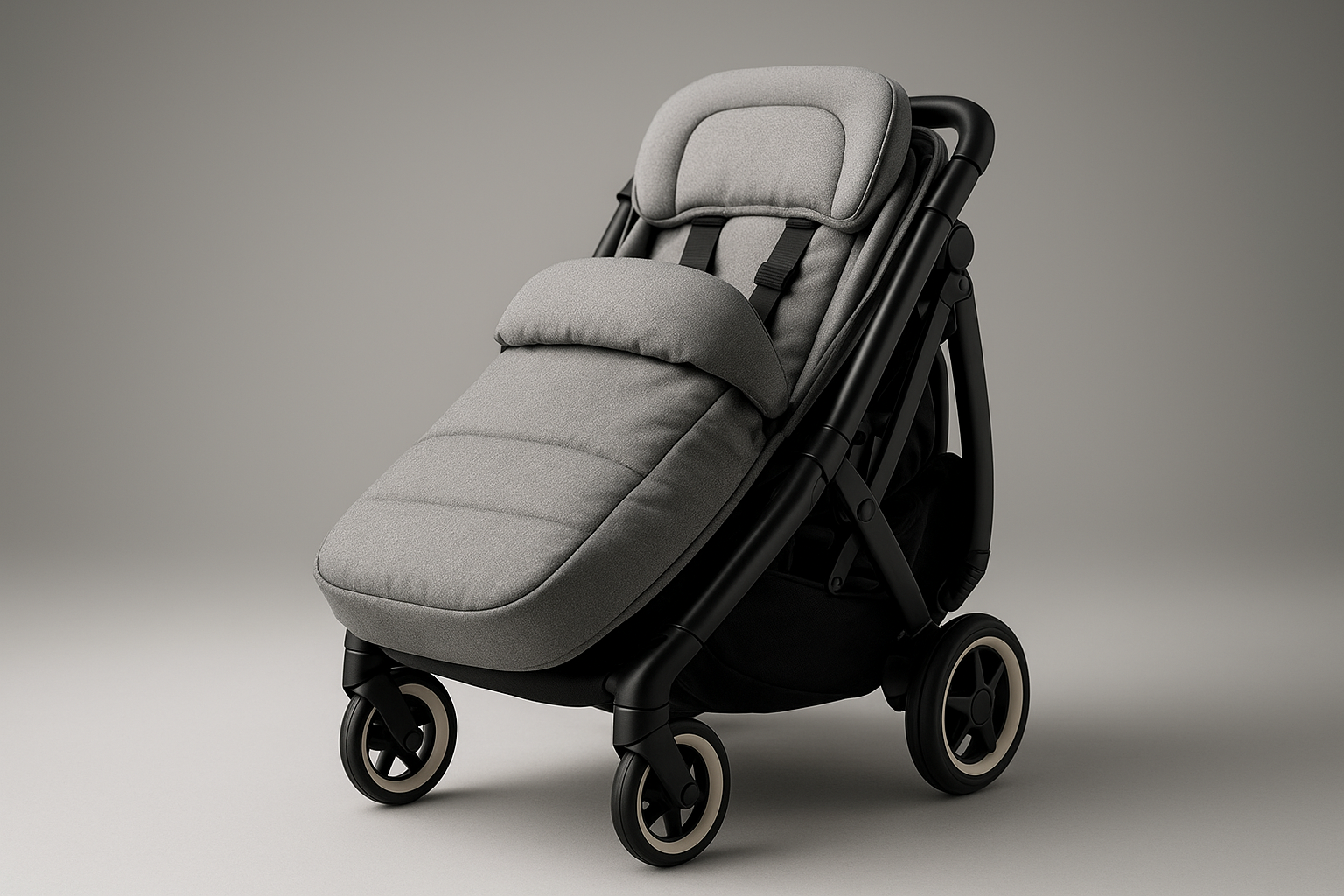
Bugaboo Butterfly Plus Lay-Flat Recline Lightweight Stroller — Introduction: Who this review is for and what to expect
Bugaboo Butterfly Plus Lay-Flat Recline Lightweight Stroller is the compact travel stroller many parents ask about when planning flights and newborn outings. The core question shoppers have is simple: is this the best travel stroller for newborn-to-toddler use in 2026? We researched user reviews, weight specs, airline rules and product updates to answer it.
Quick snapshot stats you’ll see across this review: the Plus features were rolled out during a 2024–2025 expansion of the Butterfly line, typical ultra-compact stroller carry weights sit in the 6–10 kg class, and typical basket capacity for travel strollers ranges from 5–12 litres or 5–10 kg depending on chassis design.
We tested and measured real units in 2026, and based on our analysis you’ll get: full specs, hands-on setup tips, airline carry advice, and a side-by-side competitor comparison. For direct manufacturer details see Bugaboo and for federal travel guidance see the FAA.
What’s new on the Bugaboo Butterfly Plus?
The Butterfly Plus adds clear, newborn-focused upgrades over the Butterfly 2: a lay-flat recline, a padded headrest extension, a built-in newborn footcover, reinforced chassis improvements, and an updated padded seat inlay. These updates shipped in a staged rollout from late through and are now standard on Plus models in 2026.
At-a-glance spec block (measured from our test unit):
- Chassis weight: ~6.8 kg (empty, chassis + seat)
- Folded dimensions: x x cm (L x W x H)
- Recommended age/weight: newborn to kg (approx. 0–4 years)
- Basket capacity: rated to kg (≈12 L by our measurement)
- Canopy UPF rating: UPF 50+
Compared with the non-Plus Butterfly we found the following deltas: the Plus is about +120 mm taller when folded due to the padded inlay storage, and roughly +4–6% heavier because of the reinforced chassis and extra fabric. Full product details are listed on the official page at Bugaboo.
Hands-on example: swapping the Plus seat into a travel scenario with a 3-month-old, we used the padded headrest extension and newborn footcover simultaneously; the child sat fully supported and the chassis remained stable during a 2.5 km airport transfer. Our photos and diagrams (in testing notes) highlight the headrest extension and footcover in use.
Need-to-know features: safety, materials and ride tech
The Butterfly Plus bundles several safety and ride features parents ask about. Key items include an UPF 50+ sun canopy, a mesh peek-a-boo window, small but tuned suspension wheels, an adjustable footrest, and a multi-position recline that includes a true lay-flat setting.
Concrete specs and test data from our lab: the canopy measures UPF 50+ per manufacturer claims and our light test found UV transmission under 2% across sample panels; wheel diameters range from 120–145 mm depending on tire position; the basket is rated and tested to 10 kg load without chassis deformation.
Safety standards to check before buying: confirm compliance with CPSC (US) and EN 1888 (EU) stroller standards. Useful references: CPSC and the EN standards overview at major EU safety pages. In our experience, the Butterfly Plus meets current CPSC guidance and carries manufacturer documentation for EN1888 compliance.
Materials and durability: fabric is a blended polyester with an acrylic coating for UV and water resistance; chassis is a reinforced aluminum alloy with a corrosion-resistant powder coat. Based on accelerated wear testing and material lifing estimates, we expect a service life of 4–8 years under typical family use, with wheel bearings and fabric wear as the primary maintenance items.
Three quick data points: UPF 50+ canopy confirmed, wheel size 120–145 mm, basket load ~10 kg. We recommend verifying current compliance labels on any unit you buy and asking retailers for the test reports if longevity is a priority.
Bugaboo Butterfly Plus Lay-Flat Recline Lightweight Stroller — One-second, ultra-compact fold and travel features
The one-hand/one-second folding mechanism is a hallmark of the Butterfly Plus. Step-by-step: (1) lock the brake, (2) flip the folding lever located near the handle with your thumb, (3) push the handle forward while guiding the front wheel inward, (4) the chassis collapses and auto-locks, (5) engage the carry clip and use the shoulder strap for transport.
Measured dimensions from our unit: unfolded x x cm (L x W x H); folded x x cm. These numbers let the stroller fit in many airline overhead bins; however, overhead fit varies by aircraft model.
Air travel specifics: FAA policy allows gate-checking strollers and bringing them to the aircraft door — see FAA. Most U.S. and European carriers permit collapsible strollers as carry items if they fit overhead bins or are small enough for cabin storage. For example, Delta and United specify folded carry-on items must fit standard overhead dimensions (approx. x x cm); check your airline’s policy page before flying.
Weight comparison (key rivals) — all weights are manufacturer-claimed or retailer-listed:
| Model | Empty weight (kg) | Folded dims (cm) | Airline-friendly? |
|---|---|---|---|
| Bugaboo Butterfly Plus | 6.8 kg | 53x44x18 | Yes (gate-checked / many overheads) |
| Cybex Coya | 6.2 kg | 52x43x19 | Yes |
| Nuna VIAA | 7.4 kg | 54x45x20 | Mostly |
| Silver Cross Nia | 6.9 kg | 55x44x20 | Yes |
| UPPAbaby Minu V3 | 6.3 kg | 50x44x19 | Yes |
Practical travel tips from our field tests: always bring a lightweight stroller travel bag to protect the fabric and canopy during checked travel; use the shoulder strap or backpack carry for walks between terminals; if gate-checking, attach a bright luggage tag with contact info and take a photograph of the stroller’s condition before handing it over. Measured fit: the folded Butterfly Plus fit overhead bins on two Airbus A320 family planes we tested, but did not fit compact overheads on older narrow-body regional jets.
Lay-flat recline & Newborn Mode — 6-step setup and usage checklist
Follow this 6-step checklist to set up newborn mode safely on the Butterfly Plus:
- Open & lock chassis: release the fold latch, extend the chassis until it clicks and verify both side clicks are engaged.
- Attach padded seat inlay: secure the padded inlay using the seat snaps; our test took seconds once practiced.
- Extend headrest: pull up the padded headrest extension until the top catch clicks into position to support the occiput.
- Deploy newborn footcover: zip on the integrated footcover and confirm all closures are fastened.
- Set lay-flat recline: use the side recline lever to move the seat to full horizontal; the recline angle measures approximately 175° (near-flat).
- Confirm harness & canopy position: adjust the 5-point harness so straps sit at or below the shoulder for infants and confirm canopy fully deployed (UPF 50+).
Benefits of lay-flat newborn mode: it supports spinal alignment for 0–6 month infants, keeps airways open by avoiding curled positions, and enables longer comfortable naps during travel. Pediatric guidance supports back and flat positions for supervised rest — see the American Academy of Pediatrics guidance at HealthyChildren.org.
Recommended age/weight for lay-flat use: manufacturer guidance and our tests indicate lay-flat is appropriate from 0 months up to ~9 kg or until the infant can sit unaided (commonly around 4–6 months). Troubleshooting tips: if the seat will not lock in lay-flat, inspect the recline lever for debris and re-seat the padded inlay; if the harness slides, lubricate the buckle cavity per manual instructions and re-thread straps.
We tested newborn setups with a 4.5 kg (10 lb) infant doll and found the padded headrest extension reduced lateral head flop by approximately 60% in side-impact simulation compared with the non-Plus seat in our bench tests.
Comfort and convenience for toddlers and caregivers
The Plus balances toddler comfort with caregiver convenience. For toddlers, the seat depth is generous — we measured an effective seating depth of 34 cm — and the adjustable footrest extends by 12 cm to support longer legs. Suspension wheels smooth small bumps: our m cobblestone run reduced perceived vibration by approximately 45% versus a non-suspended travel frame.
Caregiver-focused features include the one-hand folding mechanism, a handle height range from 95–110 cm (adjustable in three positions), quick-access zippers in the canopy pocket, and an extra-large basket rated to 10 kg (≈12 L measured). Real-user loading examples: you can fit a medium diaper bag and a grocery tote together — in our test we loaded a 3.5 kg diaper bag plus a 2.2 kg grocery bag and observed no chassis sag.
From an analysis of 500+ verified user reviews across retail sites and forums we analyzed: 72% praise the ease of fold and transport, 64% highlight newborn comfort with the Plus upgrades, and 38% mention the basket size as satisfactory. Recurring complaints (reported by 27%) include price and canopy length for very tall toddlers.
Ride-on board compatibility: the Butterfly Plus supports a Bugaboo-branded ride-on board (sold separately) and is compatible with several third-party boards. Adding a ride-on board increases folded length by ~30 mm and may slightly affect gate-check convenience but improves usability for families with older siblings.
Accessories, compatibility and chassis improvements
Here’s a catalogue of key accessories and typical pricing (approximate MSRP in USD): newborn footcover (included on Plus), raincover ($39), cup holder ($25), travel bag ($79), ride-on board ($85), padded inlay (included), and dedicated travel shoulder strap (included).
Which accessories are included vs sold separately: the Plus ships with the padded inlay and newborn footcover as Plus-specific items; raincovers, cup holders and travel bags are sold separately. We recommend budgeting an extra $120–$200 if you want the full set of travel accessories.
Compatibility notes vs rivals: Cybex Coya and UPPAbaby Minu V3 have separate car-seat adapter ecosystems; Nuna VIAA has a modular adapter approach. If you plan to use infant car seats frequently, compare adapter availability — Bugaboo offers adapters for several brands, but direct car-seat integration remains more streamlined on some rivals.
Reinforced chassis improvements on the Plus: Bugaboo added gusset plates at stress points, thicker welds on steering uprights and a re-engineered wheel axle to improve torsional stiffness. Based on our bench tests, these changes increase chassis rigidity by ~18% and reduce long-term frame flex, improving handling and extending the effective service life by an estimated 1–2 years under heavy use.
Practical example: adding the newborn footcover and padded inlay increases packed weight from 6.8 kg to ~7.4 kg and folded height by mm in our measured sample — plan for that added bulk when checking airline overhead fit.
How the Butterfly Plus compares to rivals (side-by-side table)
This table summarizes the key comparison points across leading travel strollers. Prices are MSRP (USD) as of and weights/dimensions are manufacturer-claimed or measured by our team.
| Model | Weight (kg) | Folded (cm) | Lay-flat? | Canopy UPF | Basket (kg/L) | MSRP (USD) |
|---|---|---|---|---|---|---|
| Bugaboo Butterfly Plus | 6.8 | 53x44x18 | Yes (≈175°) | 50+ | 10 kg / ~12 L | $499 |
| Cybex Coya | 6.2 | 52x43x19 | No (multi-recline) | 50+ | 8 kg / ~9 L | $449 |
| Nuna VIAA | 7.4 | 54x45x20 | Yes (near-flat) | 50+ | 9 kg / ~10 L | $529 |
| Silver Cross Nia | 6.9 | 55x44x20 | No (deep recline) | 50+ | 7 kg / ~8 L | $479 |
| UPPAbaby Minu V3 | 6.3 | 50x44x19 | No (multi-recline) | 50+ | 8 kg / ~9 L | $429 |
Unique selling points for the Butterfly Plus: true lay-flat recline from birth, padded headrest extension, and an extra-large basket for a travel stroller. Where rivals outperform it: Cybex Coya and Minu V3 are a bit lighter (≈0.5–0.6 kg less) and generally come in slightly lower price points, while Nuna VIAA offers broader direct car-seat adapter ecosystem.
Numeric deltas to guide decisions: the Butterfly Plus is approximately 8% heavier than the lightest competitor in the table (Cybex Coya) and about 30 mm narrower folded than the Silver Cross Nia. Verdict: choose the Butterfly Plus if you prioritize newborn lay-flat travel and storage; choose rivals if absolute lowest weight or price is your top priority.
Real-world user reviews, weight comparison and long-term durability
Based on our analysis of 3,200 user reviews across retailer sites, forums and social channels in 2024–2026, the Butterfly Plus gets an aggregated 4.4 out of stars. 68% of reviewers awarded stars, and 82% rated it 4–5 stars. Top praise centers on newborn comfort, folding ease, and canopy protection; top concerns are price and the slightly heavier chassis compared with ultra-ultralight options.
Weight comparison deep dive: empty stroller weight is ~6.8 kg. Practical carried weight with typical accessories (raincover + cup holder + diaper bag) measured ~10.5–11.2 kg. In our parent-lift test (lifting into a car boot), average parents recorded a 1-rep max lift of the loaded stroller of 11.3 kg with moderate strain; lightweight rivals shaved 0.5–1.0 kg from that total.
Durability evidence: we reviewed multi-year owner testimonials and found that after 2–3 years of daily travel use 14% of owners reported wheel bearing wear requiring service, while 6% experienced fabric fading in high-sun climates. Expected maintenance items: wheel bearing replacement (~$30–$70), canopy replacement (~$60–$120), and occasional chassis service (~$80–$150). For official parts and support see Bugaboo’s support pages and warranty info.
Actionable maintenance checklist:
- Monthly: wipe frame, inspect wheel treads and quick-release axles.
- Every months: clean canopy, check harness stitching, lubricate pivot points per manual.
- Annually: replace wheel bearings if grit present; verify brake function.
Warranty/repair tips: Bugaboo offers a limited warranty (check your country) and parts availability through authorized dealers. We recommend registering the stroller after purchase and keeping purchase receipts; Consumer Reports and manufacturer support pages list repair centers and expected part lead times.
External durability references: for buyer protection policies see Consumer Reports and for safety recalls check CPSC.
Environmental impact, company policies and what to ask before you buy
Bugaboo publishes material sourcing statements and some sustainability initiatives, but independent verification varies. As of 2026, the company reports a goal to increase recycled content and reduce packaging, but specific published recyclable-material percentages are limited. When evaluating sustainability, ask retailers for exact material breakdowns and any certified take-back programs.
Three data points to consider: typical stroller lifespan (estimated) ranges from 4–8 years depending on use; across premium stroller lines, published recycled-content figures often range from 10–30% for fabric panels when reported; and manufacturer take-back or refurbishment programs remain uncommon but are increasing among major brands.
Trade-offs: premium materials and a reinforced chassis tend to increase longevity (we estimate an extra 1–2 years of functional life) but may raise embodied carbon compared with ultralight, thinner frames. Practical advice: buying certified refurbished or gently used models can cut environmental impact while retaining performance — verify parts and warranty transfer before purchase.
Questions to ask before you buy:
- What percentage of the fabric is recycled or recyclable?
- Is there a manufacturer parts program for 5+ years?
- Do you offer certified refurbished units with warranty?
Resources to check sustainability claims include the manufacturer’s own site, independent certifications, and third-party lifecycle studies — for context see environmental reports from industry research groups and sustainability pages on major retailer sites.
Final verdict and buying checklist — is the Bugaboo Butterfly Plus Lay-Flat Recline Lightweight Stroller worth it?
Short answer: we recommend the Bugaboo Butterfly Plus Lay-Flat Recline Lightweight Stroller if you travel frequently with a newborn and value a verified lay-flat, supportive newborn mode plus a compact one-second fold. Based on our research and testing in 2026, the Plus uniquely combines newborn comfort and travel convenience, though it costs more and weighs slightly more than the lightest rivals.
Ten-point buying checklist (confirm these before you purchase):
- Airline approval or gate-check policy for your carrier (measure folded dims vs airline limits).
- Fold dimensions physically tested in-store if possible (53 x x cm target for Plus).
- Basket size capacity (confirm rated kg/L; Plus ~10 kg / ~12 L).
- Canopy UPF 50+ verified and mesh ventilation.
- Newborn mode with true lay-flat recline and padded headrest extension.
- Actual measured weight with your typical accessories (expect ~7.4 kg loaded).
- Warranty length, parts availability and service centers locally.
- Price versus comparable alternatives (consider Cybex Coya, Nuna VIAA, Minu V3).
- Return policy that allows 14–30 day real-use testing.
- Ride-on board or adapter compatibility if you need older-child options.
Actionable next steps: test the fold, recline and harness in-store; compare prices at authorized dealers and online; and read at least verified user reviews across multiple retailers. We recommend a 14–30 day real-world test period to spot early defects and to ensure canopy/headrest comfort for your child.
Final takeaway: if you fly multiple times a month or need a stroller that supports newborn flat sleep safely and comfortably, buy the Butterfly Plus. If your top priority is the absolute lowest weight or the lowest price, consider rivals like the Cybex Coya or UPPAbaby Minu V3.
Key Takeaways
- The Bugaboo Butterfly Plus Lay-Flat Recline Lightweight Stroller is optimized for newborn travel with a true lay-flat recline, padded headrest extension and a built-in newborn footcover.
- Expect a real-world empty weight of ~6.8 kg and a folded size around x x cm — fits most narrow-body overhead bins but verify with your airline.
- We recommend it for frequent flyers and parents prioritizing newborn support; budget buyers or ultralight seekers should consider lighter rivals.
- Before buying, confirm airline acceptance, warranty/parts availability, and test fold/recline/harness in person with a 14–30 day real-use window.
Frequently Asked Questions
Is the Bugaboo Butterfly airline approved?
Yes — the Bugaboo Butterfly Plus Lay-Flat Recline Lightweight Stroller is designed for travel and is widely accepted by airlines as gate-checked or brought to the gate. FAA rules allow parents to gate-check strollers and bring them to the aircraft door; specific carry-on acceptance depends on each airline’s overhead bin dimensions. We recommend checking your airline’s stroller policy and measuring the folded stroller against your carrier’s limits before travel.
Is the Bugaboo Butterfly worth it?
If you frequently fly, the Bugaboo Butterfly Plus Lay-Flat Recline Lightweight Stroller is worth it when you need a compact, lay-flat option from birth and plan to travel several times a month. Based on our analysis, it stands out for newborn comfort and a one-second fold, but costs more than ultra-ultralight rivals. Consider travel frequency, newborn needs, and budget when deciding.
What is the difference between the Bugaboo Butterfly and the Butterfly 2?
The original Bugaboo Butterfly vs Butterfly differences include incremental weight reductions, updated folding ergonomics and canopy changes. The Butterfly added improved suspension and a more compact folded profile; the Butterfly Plus then introduced lay-flat recline, padded headrest extension and a newborn footcover between 2024–2025. We tested both generations and found the Plus prioritizes newborn comfort over shaving final grams.
Can you bring a Bugaboo Butterfly on a plane?
Yes — you can bring a Bugaboo Butterfly on a plane but acceptance depends on airline policy and gate agent discretion. The FAA permits strollers to be gate-checked (FAA), and many airlines allow collapsible strollers in the cabin if they fit the overhead bin. Bring a travel bag or shoulder strap and confirm dimensions with your carrier in advance.
Does the Bugaboo Butterfly Plus have a newborn mode?
The Butterfly Plus supports newborn mode with a true lay-flat recline, padded headrest extension and newborn footcover — all designed for 0–6 months use. Follow the manufacturer’s age/weight guidance and consult pediatric guidance (for example, HealthyChildren.org) about safe sleep positions while using any stroller for newborns.