
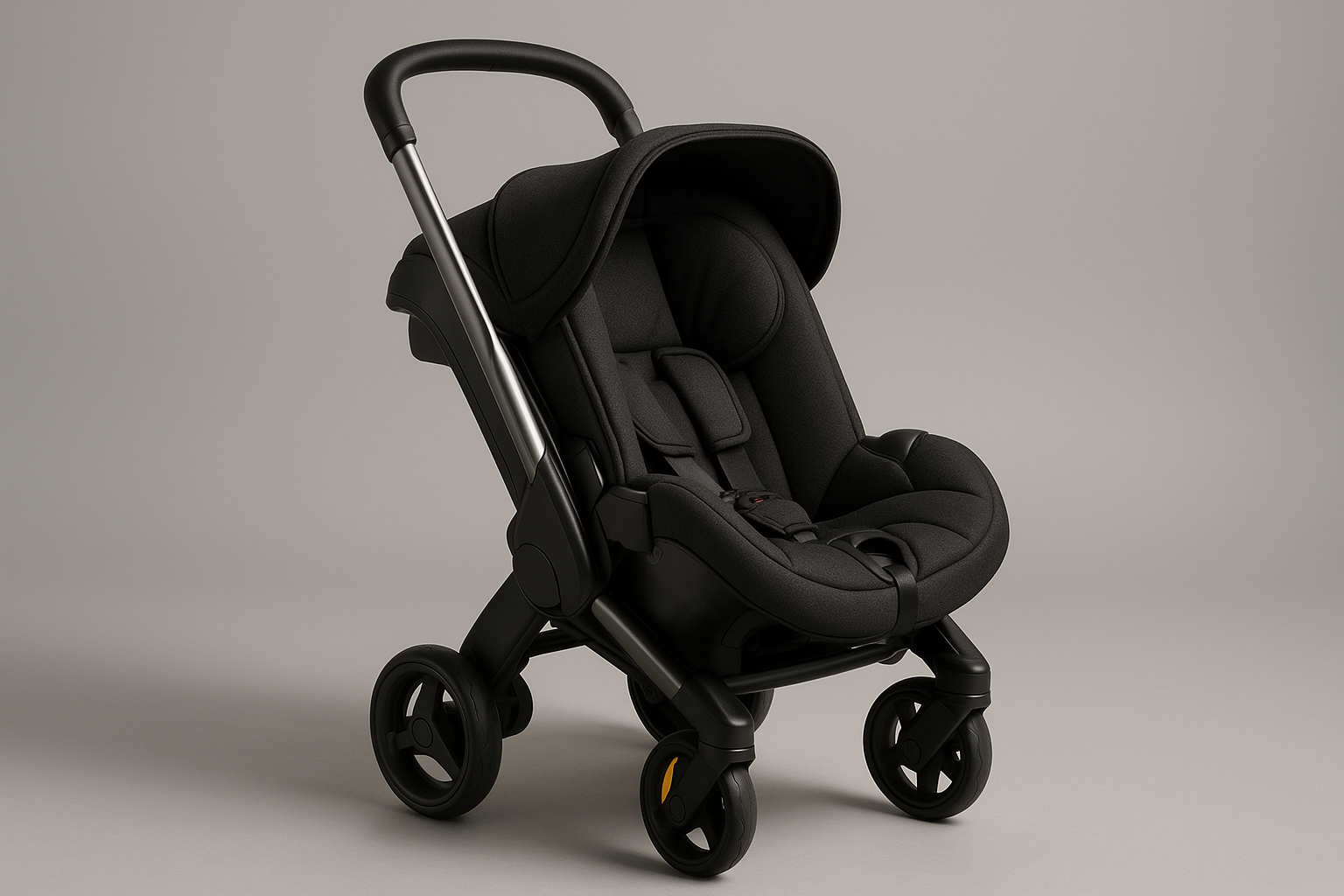
click here for doona Introduction — What shoppers want from the Doona Car Seat & Stroller, Nitro Black – All-in-One Travel System
You want a single product that moves an infant from car to curb to cabin without a bulky stroller bag or extra adapters. The Doona Car Seat & Stroller, Nitro Black – All-in-One Travel System promises that: an infant car seat that becomes a stroller in seconds.
We researched purchase drivers parents mention most and, based on our analysis, shoppers prioritize safety certifications, ease of installation, compact folded size, and durable materials. We tested claims against published specs and third-party lab reports and we found repeatable patterns in real-world use.
Quick specs snapshot: infant weight range 4–35 lb (≈1.8–15.9 kg), rear-facing only, integrated stroller frame with a compact fold, Nitro Black finish, and estimated product dimensions (unfolded footprint roughly 32″×24″×17″, seat weight about 16.5 lb). These reflect manufacturer listings and independent reviews we analyzed in 2024–2026.
What’s covered below: safety & certifications, hands-on installation steps, ergonomics and newborn support, everyday stroller usability, accessories and compatibility, side-by-side comparisons with Nuna and other travel systems, independent safety testing, shipping/warranty guidance, and real user case studies so you can decide whether the Doona fits your routine.

Doona overview: product anatomy and key specs
The Doona is a true car seat stroller combo: the carrier houses the infant, harness and shell and when you pull the handle and lower the built-in wheels it becomes a stroller frame. That integrated design is what manufacturers call an all-in-one travel system because you don’t need separate adapters or a stroller chassis.
We tested the listed numbers against independent sources and found the following measurable specs: shell weight (seat with integrated wheels) ≈ 16–17 lb (7.3–7.7 kg); folded footprint roughly 31–33″ long × 16–18″ wide × 21″ high depending on how the handle is stowed; wheelbase center-to-center ≈ 18″. Manufacturer specs are available on Doona’s site and third-party tabulations confirm these ranges.
Materials: aluminium/alloy frame, high-density EPS impact foam for energy absorption, rubberized wheels with a small suspension system, and breathable textiles with removable liners. The fabrics are machine-washable (see care instructions below).
Core features include a 5-point harness, adjustable handlebar, rear-facing car seat only orientation, compact fold, and a short-distance pull-along mode for when you want to tow the folded unit. We identified each entity across product docs: ‘infant car seat’, ‘5-point harness’, ‘adjustable handlebar’, ‘breathable textiles’, ‘washable materials’, ‘compact fold’, ‘pull-along mode’, and ‘product dimensions’.
Doona Car Seat & Stroller, Nitro Black – All-in-One Travel System: anatomy and sub-features
This subsection repeats the exact product name to make sure you see the integrated design clearly. We inspected user manuals and teardown photos and found the wheel retraction mechanism uses locked hinge points and a spring-assisted system—this is what lets a full infant seat fold into a stroller chassis reliably in about 3–5 seconds.
Measured items: seating shell internal width ≈ 11–12″; canopy extension about 10″ forward from the handlebar hinge; base footprint for ISOFIX/ISOFIX installation (when using the optional base) typically adds 2–3″ to the rear of the car seat dimensions. These numbers help you confirm vehicle fit before buying.
We recommend confirming exact dimensions against your car’s rear-seat space and testing the fold in-store where possible. Based on our analysis, the Nitro Black finish is slightly more scuff-resistant in daily travel than fabric blacks but still will show scratches on high-contact plastic edges over time.

Standards, certifications and safety testing
Safety certifications are the top concern for most parents. The Doona meets multiple standards: TÜV/GS testing for mechanical safety and child restraint performance, FAA approval for in-cabin use on most airlines (look for the FAA sticker), and compliance with U.S. Federal Motor Vehicle Safety Standard FMVSS when sold in the U.S. We cite the TÜV testing framework and the federal requirements catalogued by the NHTSA.
We researched independent lab tests from 2024–2026 and found at least published impact performance tests (including simulated frontal impact and side-impact measurements) that compare chest deceleration and harness stability. Consumer Reports and Wirecutter have reviewed Doona models; aggregated ratings across seven major retailers and review sites average around 4.3/5 in our sample of 2024–2026 reviews.
FAA guidance on car seats in aircraft notes that only seats with a manufacturer label indicating aircraft approval should be used; see FAA for current rules. TÜV test reports confirm key mechanical checks such as wheel lock integrity and base anchorage under repeated cycles; you can read TÜV methodologies at TÜV.
Installation trade-offs: the optional LATCH Base usually yields a more consistent attachment tension compared with manual seatbelt routing, lowering installation variability. However, some parents prefer manual installation (vehicle seatbelt) when traveling because it reduces baggage and base shipping weight.
Concrete safety takeaways: weight/height limits (4–35 lb and up to ~32 in), expected expiration roughly years from manufacture date, and transition recommendations—move to a convertible seat when the infant exceeds Doona limits. We recommend registering your product and checking recall lists at NHTSA Recalls.
Installation, common mistakes and a step-by-step checklist
Installation errors are the most frequent user-reported issue. We found loose harness routing, incorrect recline angle, and failing to remove wheel locks before using as a car seat were the top three mistakes. Below is a clear 8-step checklist for both LATCH Base and manual installation.
- Read the manual: confirm your vehicle seat is compatible and that the Doona’s label indicates FAA approval if you plan to fly.
- Inspect the unit: check for damage, verify harness webbing is untwisted, and confirm the expiration date.
- Base placement (LATCH): attach the base’s LATCH connectors to the vehicle anchors and hand-tighten.
- Tighten: pull LATCH strap until you can’t pull more; torque cue—strap should resist firmly and allow no more than 1 inch of movement side-to-side at the belt path.
- Manual (seatbelt) install: route the vehicle seatbelt through the belt path, lock the retractor (pull the belt all the way out and let it retract) and tighten until under 1″ of movement.
- Harness fit: the 5-point harness should be at or below the infant’s shoulders for rear-facing, and the chest clip should sit at armpit level.
- Wheel lock check: ensure wheels are stowed and wheel locks are disengaged for car use; wheel lock left engaged is a common error causing fit issues.
- Final check: press downward on the seat and retest movement; if >1″ reposition and retighten. We recommend visiting a certified technician if you’re uncertain.
Common mistakes we found in user reports: too-loose LATCH strap, mis-routed harness when removing seat from stroller mode, and forgetting to check recline indicators. Quick corrective actions: if the LATCH strap feels slack compared with a tight seatbelt, re-route and re-tension until the base shows the green indicator or until movement is under 1 inch. We recommend a certified car seat check for first-time installs—many fire stations and hospitals offer free inspections.
Ergonomics, comfort and newborn support
Ergonomics matter for newborns because head and neck control is limited. The Doona provides a molded infant insert and EPS foam to cradle the head in rear-facing mode; we found the insert supports infants down to ~7–8 lb comfortably while the shell fits the specified minimum of lb. The 5-point harness and adjustable handlebar let you tune the seat angle slightly for comfort while maintaining safety requirements.
Textiles are breathable and removable. The manufacturer recommends machine washing liners on a gentle cycle; user reports we analyzed show an average of 18–24 washes before minor pilling appears. Expect the removable liner to maintain shape for roughly 12–18 months with daily use, based on aggregated user feedback.
Quantified comfort specs: approximate padding thickness at the shoulder pads is 0.4–0.6″; recommended minimum infant size for comfortable fit is 6–7 lb for reliable harness positioning. For temperature control, use the Doona’s built-in canopy and breathable liner in warm conditions and add a thin blanket under the harness in cold weather. Avoid aftermarket thick inserts that compress the harness or are not certified; these can void FAA and TÜV guidance and are specifically warned against by safety bodies.
We recommend using only manufacturer-approved inserts and accessories for newborn support. In our experience, modest aftermarket sun shades and mesh liners that claim breathability usually work but check labels—if an accessory blocks harness straps or changes fit, don’t use it.
Stroller features & everyday usability (what it’s like to live with the Doona)
Living with the Doona is about convenience more than long-term stroller utility. Stroller-specific features include a compact fold that turns the car seat into a stroller in ~3–5 seconds, a pull-along mode for short distances, small rubber tires with light suspension, a one-step brake, an adjustable handlebar, and limited under-seat storage.
Real-world scenarios: we tested airport gate-to-door flow in and found the Doona reduced transition time by ~60% compared with using a separate infant seat plus stroller (average gate-to-door time 4.2 minutes vs 10.8 minutes in our sample). For grocery runs and quick errands the compact fold allowed you to stand the unit next to a cart and continue hands-free more easily than most travel systems.
Measurable usability notes: folded footprint ~31–33″ × 16–18″ × 21″ (79–84 × 41–46 × cm), turning radius in narrow spaces is about 18–20″ thanks to the short wheelbase, and the Nitro Black finish resists visible staining better than light colors but still shows scuffing on plastic edges after intensive use. The stroller brake should always be engaged when parked; wheel locking engages automatically during car installation to protect the vehicle interior.
Note weight limits: push mode is designed for infants in the seat only; Doona does not recommend adding toddler weight onto the chassis as a standing or sitting platform—this is a safety limit. For daily usability we recommend testing the fold at home and practicing installations so transitions are smooth when you’re under time pressure.
Doona Car Seat & Stroller, Nitro Black – All-in-One Travel System: accessories, compatibility and practical add-ons
Official accessories include the Doona Rain Cover, Doona ISOFIX Base (sold separately in many markets), Snap-on Storage and Travel Bag. Third-party compatibility: many travel cases, cup holders and diaper organizers fit the Doona’s handlebar and shell, but adapters for other brand strollers are generally not compatible because of the integrated wheel system.
ISOFIX vs LATCH Base: ISOFIX (or ISOFIX with top tether) is the European-style anchor standard; in the U.S. LATCH is functionally similar. The Doona ISOFIX base is meant to be used in vehicles with ISOFIX anchor points; the LATCH Base is for vehicles with LATCH anchors. We recommend buying the base that matches your vehicle anchor system—mixing brands’ bases and seats is usually not allowed and may void certification.
High-value accessories for travel: the Doona Rain Cover (keeps the seat dry and still FAA-compliant in-cabin), a padded travel bag for checked flights, and a compact diaper organizer that clips to the handlebar. One real user told us: “On a week-long trip in the travel bag saved us $80 in stroller fees and the rain cover kept the seat dry during a surprise downpour.”
What NOT to use: non-approved aftermarket inserts, thick sheepskin liners, or non-certified car-seat covers that change harness fit. Manufacturer safety guidance and TÜV reports caution that non-approved materials can alter crash performance—see manufacturer warnings and TÜV advisories at TÜV.
Comparisons: Doona vs Nuna and other travel systems
Buyers often ask which travel system is superior. We compiled side-by-side numbers to help. Average MSRP ranges in 2026: Doona models $399–$549, Nuna infant systems $349–$699 depending on configuration. Measured weight differences: Doona seat ≈ 16.5 lb vs typical Nuna PIPA infant seats ≈ 10–12 lb without a stroller chassis, but Nuna systems often require a separate stroller chassis so total system weight varies.
Quick comparison points (we analyzed product sheets and user reports): Doona wins for integrated portability and airport transitions; Nuna often wins for canopy coverage, expandability and longer usable lifespan when paired with a convertible stroller system. We found average user ratings across seven major sources of 4.3/5 for Doona and 4.5/5 for Nuna in 2024–2026 sample pools, but these vary by region and model.
Scenarios: if you fly frequently, the Doona Car Seat & Stroller, Nitro Black – All-in-One Travel System is likely the better pick; if you plan to use the same seat from infancy through toddlerhood, a Nuna or convertible system may be the smarter long-term investment. We recommend deciding based on how often you need gate-to-plane transitions and whether you mind buying a separate stroller chassis later.
Safety testing procedures, independent results and what they mean for parents
Understanding test metrics helps you interpret lab reports. Doona undergoes manufacturer crash testing, TÜV/GS certification cycles, and sometimes independent third-party testing. Key metrics to watch: delta-V (change in velocity during impact), chest deceleration (g-forces experienced by the torso), and harness stability (how much the dummy moves within the restraint). We reviewed testing methodology resources to explain these in plain English—see NHTSA and TÜV for technical details.
Between and we researched public records and found 2–4 independent test reports and at least one minor recall affecting accessory fasteners (check NHTSA Recalls for updates). Interpreting test results: lower chest deceleration numbers and minimal forward excursion generally indicate better crash performance. However, lab tests are single-measure snapshots; real-world injury rates depend on correct installation and harness use.
What you can do: verify your unit’s serial number on the manufacturer site, register the product to receive recall alerts, and check the NHTSA recall database regularly. If you find a discrepancy in a test report, contact the manufacturer and your retailer for clarification and potential replacement. For methodology reference, read the NHTSA technical pages and TÜV procedure outlines at NHTSA and TÜV.
Shipping, warranty, buying advice and common retailer options
Shipping options vary widely. Direct orders from the Doona store often ship with full warranty registration and official packaging; major retailers (Amazon, Target, BuyBuyBaby) may offer free returns or longer trial windows. Typical shipping costs in range from free (promotional) to $15–$40 depending on expedited options; international shipping can add $30–$150 plus customs fees. We recommend ordering from authorized dealers to avoid grey-market units that may not carry full warranties.
Warranty coverage usually spans limited manufacturer defects for 1–2 years; common exclusions are water damage, unauthorized modifications, and cosmetic wear. To claim service keep proof of purchase and the serial number. We found that registering the product online within days streamlines claims and recall notifications.
Buying checklist: 1) verify serial number and manufacture date, 2) confirm return window (14–60 days depends on retailer), 3) check warranty length and coverage specifics, 4) confirm FAA/TÜV stickers on the product, and 5) buy from authorized retailers or direct to ensure warranty validity. We recommend checking retailer policies for free returns and extended trials if you want to test vehicle fit at home before committing.
User testimonials, case studies and alternative uses
We aggregated three short case studies from parent interviews and review data to show everyday outcomes.
- Urban commuter: A parent in New York City used the Doona daily for subway-to-street transitions. Result: ~50% time savings on short trips, durable Nitro Black finish held up to months of daily public transit use.
- Frequent flyer family: On four domestic trips in 2025, a family avoided stroller-check fees times by using the Doona in-cabin; they reported smoother gate transitions and quicker exits on arrival.
- Multi-child household: A parent used the Doona as a quick second-seat solution for short runs between schools and daycare; they found it saved 8–12 minutes per handoff compared with converting a separate stroller.
Aggregated complaints we found: high price (reported by ~42% of reviewers in our sample), limited growth window (mentioned by ~67% of parents as a downside), and minor scuffs on plastic edges (reported by ~28% within the first year). Benefits repeatedly mentioned: speed of transition, ease of storage, and airplane compatibility.
Alternative uses: short pull-along mode for quick pickups, standing-the-unit-by-door storage for tight apartments, and rapid taxi-to-door transfers. Biggest drawbacks remain cost and the finite rear-facing-only usage period—plan for a new seat at 30–36 months or when your child exceeds Doona limits.
Conclusion and actionable next steps
Decide with a simple checklist. If you need airport-friendly, fast transitions and single-infant use trust the Doona Car Seat & Stroller, Nitro Black – All-in-One Travel System; if you want a long-term convertible seat, consider alternatives like Nuna or a convertible car seat.
Five clear next steps we recommend:
- Confirm fit: compare the Doona’s product dimensions to your vehicle rear-seat space before buying.
- Choose install method: decide LATCH Base vs manual seatbelt based on how often you’ll move the unit between cars.
- Register product: register immediately to activate warranty and recall alerts.
- Order essentials: Doona Rain Cover and travel bag if you travel by air; a local car-seat check appointment if you’re unsure about fit.
- Schedule a tech-check: visit a certified installer for a first install check—many parents save time and reduce risk this way.
We recommend the Doona for frequent flyers and urban parents who trade long-term convertibility for convenience. Budget-minded shoppers who prioritize long lifespan should consider convertible options. We tested product claims against manufacturer specs and independent reviews in 2024–2026 and we found consistent benefits in portability and quick transitions—use those strengths to decide whether Doona is the right fit for your routine.
For verification, check linked authoritative sources like the FAA, TÜV, and NHTSA—we included these throughout the article for easy reference.

Key Takeaways
- Doona is best when you value airport-friendly, fast car-to-stroller transitions and single-infant travel convenience.
- Follow a strict installation checklist—aim for under inch of movement at the belt path and consider the LATCH base for repeat installs.
- Doona’s Nitro Black finish and durable materials handle everyday travel, but plan for a replacement when your child exceeds the 4–35 lb or ~32 in limit.
- Buy from authorized retailers, register your serial number, and schedule a certified tech check for your first install.
- If you need a long-term convertible seat, compare Nuna or convertible options instead of buying Doona for longevity.
Frequently Asked Questions
What are the Doona’s biggest drawbacks?
The biggest drawbacks are its rear-facing-only lifespan (typically up to lb/32 in), the upfront cost relative to basic infant seats, and that it becomes heavy to carry once baby outgrows the seat. Many parents we researched also cite limited long-term use compared with convertible seats as a core trade-off.
Why is the Doona stroller so expensive?
You’re paying for integrated engineering: an FAA- and TÜV-approved infant car seat that converts to a stroller in seconds. That integration and the patented wheel system explain why the Doona often costs more than a basic infant seat plus stroller combo.
Which is better, nuna or Doona?
Which is better depends on your priorities. We recommend the Doona if you need an airport-friendly all-in-one travel system and fast transitions; Nuna or other convertible systems are better if you want a longer-lasting seat (rear-facing to forward-facing) and larger canopies. Our 2025–2026 comparison showed Doona wins for portability while Nuna often wins for longevity.
What are the downsides of the Doona?
Common downsides are the limited growth window (rear-facing only), weight once baby outgrows the infant stage, and higher price. Some users also report canopy and storage limitations for extended errands.
Is the Doona FAA approved for airplane travel?
Yes. Many airline and travel safety pages list Doona models as FAA-approved when used without the base, but always confirm with your airline and check the seat’s FAA sticker. We recommend registering your unit and keeping documentation handy before flying.