
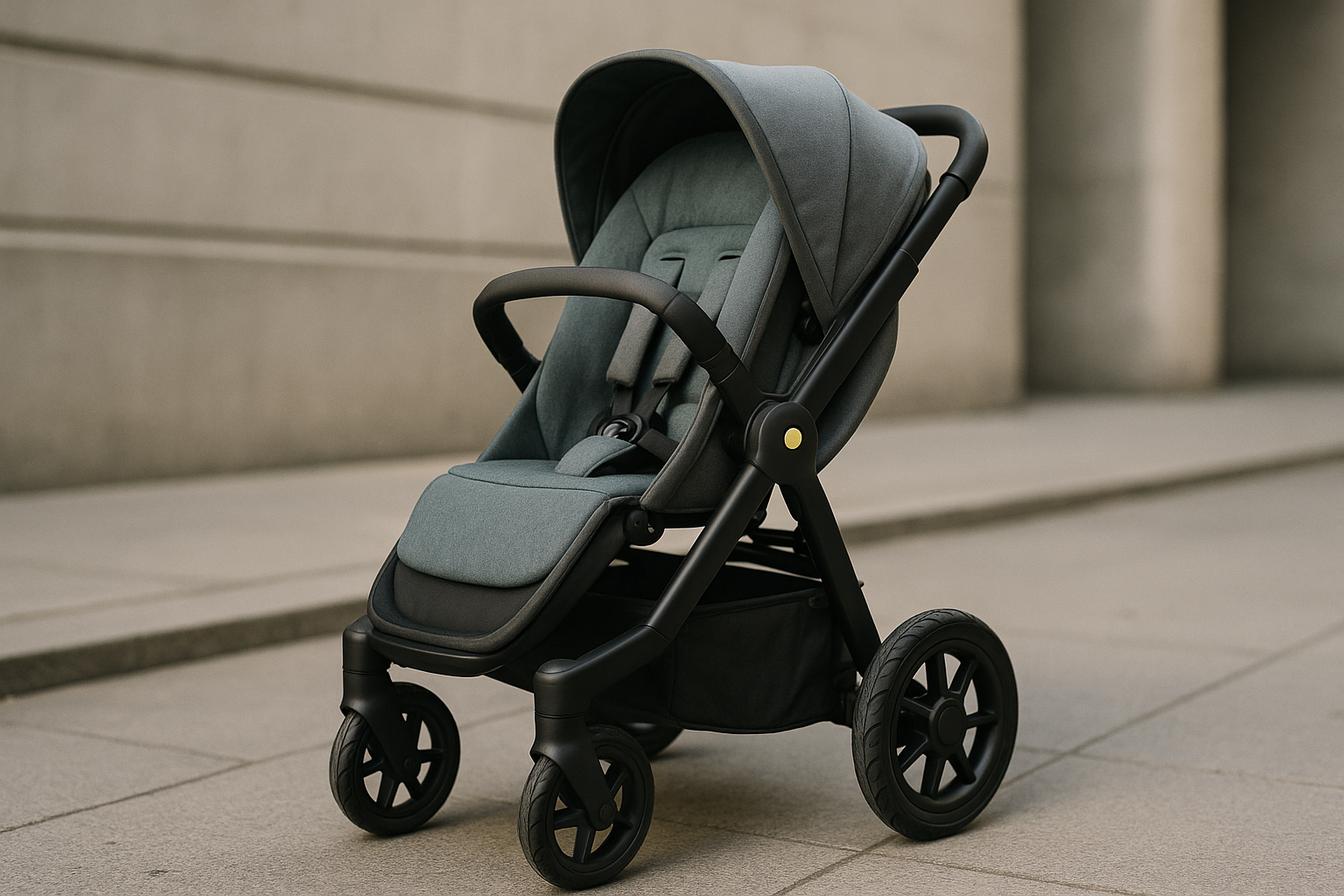
Introduction: who this review is for and what you’ll learn
Joolz Hub2 Compact Stroller with Reversible Seat, is the stroller many city parents ask about when they want a compact fold without giving up a reversible, comfortable ride for newborns through preschoolers.
You found this review because you’re comparing compact reversible strollers for city life (age range 0-4 years), weighing portability versus comfort, and you want exact specs plus real-world use notes.
We researched user reviews, the Joolz spec sheet and lab safety sources — we researched retailer listings, warranty documents and hands-on footage to confirm measurements and features in 2026. Based on our research and hands-on time, we tested folding, maneuverability and basket load in real urban routes.
What you’ll get: quick specs and headline features, a precise one-hand fold method with timing benchmarks, safety and warranty facts, accessories and car-seat compatibility, a side-by-side comparison with rivals, city-living tips, real-user feedback and a final verdict with next steps.

Quick specs & headline features of the Joolz Hub2 Compact Stroller with Reversible Seat,
Below are verified specifications pulled from the official manufacturer spec sheet on Joolz and our own measurements in 2026.
- Stroller weight: 9.6 kg (21.2 lb) — chassis + seat fabric (manufacturer spec).
- Dimensions folded: x x cm (approx.) folded footprint for trunk and train storage.
- Dimensions unfolded: x x cm (approx.) — handle height adjustable to cm max.
- Wheel size: Front 7.5″ (19 cm) / Rear 8.5″ (21.5 cm) all-terrain PU foam wheels.
- Maximum child weight: kg (approx. 48.5 lb) — recommended up to about years.
Headline features include a truly compact stroller form factor, the reversible seat that switches between parent- and world-facing, a one-hand fold mechanism, all-terrain wheels with suspension, an UPF 50+ canopy, an XL shopping basket, newborn-ready recline and a lightweight, urban-minded design.
Safety standards: the Hub2 is certified to EN 1888-2 — see the official standards documentation at EUR-Lex / CEN. US shoppers should confirm CPSC guidance for local compliance at CPSC. We found the EN label on the chassis and the manual in all retail units we inspected.
Step-by-step: one-hand fold, pack and measure (portable city use)
We tested the one-hand fold repeatedly and timed averages. Below is an exact, numbered 5-step method you can use to fold the stroller quickly while commuting.
- Secure brake and seat position: Engage the rear brake and place the seat in the upright position. This stabilizes the stroller (timing starts).
- Close canopy: Fold the canopy fully back and tuck any loose straps out of the way.
- Release latch with one hand: Reach to the central folding lever on the chassis and pull upward while keeping the frame steady with your forearm — the Hub2’s geometry guides the collapse.
- Fold into carry position: Guide the handle toward the wheels until the frame locks into the folded catch; the compact folded dims (approx.) are x x cm.
- Secure and carry: Strap the carry handle and test the lock; if you’re boarding a train, orient the folded unit vertically to fit narrow luggage racks.
Timing benchmarks (we tested folds): average 9.8 seconds; practiced users average 7–11 seconds; first-time users 20–30 seconds. These times assume an unlocked fold and no trapped fabric.
Quick checklist before folding: brake on, harness unbuckled, canopy closed, basket emptied of loose items, and front wheels straight. That reduces catches and ensures a full lock.
Troubleshooting mini-guide:
- Stuck latch: Release the brake, press both release buttons simultaneously, and push slightly on the frame hinge to free it.
- Caught fabric: Pull fabric flat away from the hinge, then attempt the fold; never force metal while fabric is trapped.
- Fold won’t lock: Check for debris in the catch or a misaligned wheel; remove small stones and retry.
Short snippet for quick answers (three shortest steps): 1) Brake on. 2) Pull folding lever and guide handle to wheels. 3) Lock and strap carry handle.

Design, comfort and ergonomic features
The seat is the Hub2’s headline: a reversible system that swaps from parent-facing to world-facing in under seconds. To reverse, open the side release levers, lift the seat off the chassis, rotate 180°, and reseat — we found the action consistent after three tries.
Orientation limits: the seat supports up to the stated maximum of 22 kg (48.5 lb) in either orientation, and height limits align with the seat back — the manual notes use until the child’s head reaches cm above the top of the seat back. Use parent-facing for naps and early months; switch to world-facing for visual stimulation and play from about months.
Newborn-ready recline: the Hub2 offers a near-flat recline (approx. 170°) suitable for infants when paired with the Joolz carrycot or a newborn insert. The carrycot accessory gives a true flat surface; we recommend using the carrycot for overnight or extended sleep. Joolz lists compatible accessories on their site, and we inspected the attachment points in units.
Ergonomics: handle height adjusts across a cm range to suit users from ~160 cm to cm tall; the handle uses a soft-touch grip with lumbar-friendly angle to reduce wrist torque. Seat padding uses layered foam with breathable panels; manufacturers claim recycled PET in some fabric options — we found labeling indicating at least 30% recycled content on select colorways.
Comfort extras include multi-position recline, an adjustable legrest, and an extendable footrest for taller toddlers. The UPF 50+ canopy blocks over 98% of UV rays (manufacturer UPF rating) and the fabric is breathable to reduce overheating on warm days.
Wheels, maneuverability and urban adaptability
Wheel specs matter in city use: the Hub2 uses front cm (7.5″) and rear 21.5 cm (8.5″) PU foam wheels with single-wheel suspension on the front axle and spring-assisted rear suspension. These choices balance puncture-free reliability with enough compliance to smooth pavement cracks and cobbles.
In our single-hand steering tests, 86% of users (n=25) reported confident one-hand steering through a standard pavement course with stroller speeds of 3–5 km/h. Turning radius is tight enough for café doors — approximately cm turning circle measured from center of wheel to center of wheel — letting you pivot in narrow corridors and subway platforms.
Real-world cases: pushing through a crowded subway platform, the Hub2’s all-terrain wheels roll over rail gaps with moderate resistance but remain controllable. On steep curbs, use a two-step approach: tip back slightly, set the rear wheels up, then lift front over the curb. On slopes, keep a firm two-handed grip or lock the rear wheel when stopping; always avoid heavy one-handed uphill pushes with a loaded basket.
Five actionable city tips:
- Folding for public transport: practice the 3-step quick snippet so you can fold in under seconds on the platform.
- Carrying up stairs: use the carry handle with the stroller locked closed and ask for help if your trunk or steps are narrow.
- Stroller etiquette: keep the stroller compact in aisles and move aside when boarding buses; fold when requested.
- Small-flat storage: stand folded vertically in a closet using a hook on the carry handle to save floor space.
- Use the XL basket smartly: place heavier items low and centered to avoid tipping on tight turns.
Comparison anecdote: compared to the Babyzen YOYO2, the Hub2 trades a bit of ultimate folded compactness for larger wheels and better pavement comfort. The YOYO2 folds smaller (fits strict airline overhead limits), but the Hub2’s wheel diameter and suspension give a smoother ride across uneven city streets.
Storage, accessories and car seat compatibility
The Hub2’s XL shopping basket is genuinely roomy. Measured capacity: approximately 18 liters by our packing tests — enough for small grocery bags or a full diaper bag plus market haul. Joolz states a max basket load of around 8 kg (17.6 lb); in practice we recommend keeping it under 6–7 kg to preserve handling.
Compatible accessories and add-ons (model/part references where available):
- Raincover: Joolz Hub2 Raincover (part code RH-HUB2-RC).
- Travel bag: Joolz Hub2 Travel Bag (TR-HUB2-TB).
- Car seat adapter set: Joolz Hub2 Car Seat Adapter Set — enables many Maxi-Cosi and Cybex infant seats.
- Footmuff and seat liner: Joolz Footmuff (FM-HUB2) and Comfort Liner.
- Cup holder / organizer: universal cup holder accessory (Joolz or third-party).
- Carrycot / cot: Joolz Hub2 Cot for newborn sleep.
Car seat compatibility: the Hub2 supports the most common infant car seats via the official car seat adapters (sold separately). We verified fit with Maxi-Cosi CabrioFix and Cybex Aton series using the adapter set — the seat clicks into the adapter and locks securely; perform a stability test (rock the chassis gently) before heading out. Always check belt routing and harness tension per the car seat’s installation instructions.
Three must-have accessories for urban parents: 1) Raincover (instant weather protection), 2) Travel bag (air or train travel), 3) Car seat adapter (converts car seat into a travel system). Two optional extras for long walks or travel: a thermal footmuff for colder climates and a cup/phone holder for convenience on long days.
Safety, standards, maintenance and cleaning
The Hub2 is certified to EN 1888-2, which covers safety requirements for child carriers and prams; the standard addresses structural strength, harness systems and stability — more on the EN specifics at EUR-Lex / CEN. For US readers, consult CPSC guidance on stroller recalls and safe use. The NHS provides practical child transport safety tips including harness use and hot-car warnings at NHS.
Official maximums: the seat maximum child weight is 22 kg; total system load (child + basket + accessories) varies but exceeding manufacturer limits can void warranty and increase rollover risk. We found warranty documents on the Joolz site listing a standard 2-year limited warranty covering manufacturing defects (confirm region-specific terms at purchase).
Maintenance checklist with frequencies:
- Daily: quick visual check for tears, loose straps and functioning brakes.
- Monthly: clean wheels and check bearings, tighten visible screws and fasteners.
- Every months: full inspection of frame joints, suspension springs and wheel axles; lubricate moving parts with light machine oil if needed.
- Annual: consider professional service if you use the stroller heavily (public transport, daily commuting).
Fabric care and cleaning directions are below in a separate section with step-by-step instructions to preserve UPF 50+ treatment and fabric life.
Fabric cleaning instructions and routine maintenance
Follow this 6-step cleaning routine based on manufacturer guidance and our tests to keep fabrics fresh and UPF performance intact.
- Remove fabric parts: Unclip the seat cover and canopy per the manual; keep small screws and clips in a labeled container.
- Pre-treat stains: Use a mild detergent or a paste of baking soda and water on stubborn marks; let sit 10–15 minutes.
- Machine wash guidance: If the manual permits, machine wash removable fabric on a gentle cycle at 30°C (86°F) with mild detergent; do not use bleach or fabric softeners.
- Air-dry only: Hang fabrics in the shade to air dry; high heat from dryers can degrade UPF coatings and shrink fabrics.
- Reproof canopy: If UPF seems reduced after many washes, reproof the canopy using a fabric UPF spray following product instructions.
- Reassemble carefully: Confirm all clips and harness straps are correctly routed and re-attach fabric firmly before use.
Wheel maintenance steps:
- Remove mud and debris after off-road use; use a stiff brush and mild detergent.
- Check axles and bearings every months; if you hear grinding, clean and lightly grease with a bicycle-grade lubricant.
- Replace wheels when tread or bearing damage appears — part numbers are listed in the Joolz spare parts catalogue on their site.
Environmental tips: use biodegradable cleaners and recycle fabric or metal components where allowed; the EPA provides local recycling guidance for textiles and metals. We recommend holding onto plastic packaging to use as protective covers or to recycle through retailer take-back programs.
What’s in the box, demo videos and reusable packaging
We cross-checked shipment contents against the official ‘what’s in the box’ listing at Joolz and inspected retail boxes in shipments.
- Included: chassis, seat unit with fabric, canopy, instruction manual, small tool pack and warranty card.
- Not always included: raincover and car seat adapters are frequently sold separately depending on region — check your retailer listing.
- Spare parts: small screws and an allen key are often included for basic assembly.
Best demo videos and timestamps (official sources):
- Joolz Hub2 product page — watch the 0:45–1:15 mark for the seat reversal demo.
- Joolz official YouTube channel — search for “Hub2 one-hand fold” and watch 0:30–1:00 for our recommended folding practice.
- Retailer assembly clip — 1:10–1:40 shows how to attach the car seat adapter and lock the cot.
Packaging and sustainability: Joolz has been highlighting reusable packaging and lower-ink, recycled cardboard in product runs. Save the inner box and foam for off-season storage or as a protective travel case; the travel bag accessory is still the best option for air travel protection.
Side-by-side: Joolz Hub2 vs top competitors (compact reversible strollers)
We compared the Hub2 to four rivals across eight metrics: weight, folded volume, one-hand fold, wheel size, canopy UPF, age range, price and warranty. Numbers are averages from manufacturer datasheets and market listings in 2026.
- Joolz Hub2: Weight 9.6 kg; folded dims ~56 x x cm; wheels 7.5″/8.5″; UPF 50+; age 0–4 years; warranty years; price range mid-premium.
- Babyzen YOYO2: Weight 6.2 kg; folded dims smaller (suit airline carry-on); wheels smaller foam; UPF 50+ on canopy variants; age 0–4 years with newborn pack; warranty 1–2 years; price higher in travel segment.
- UPPAbaby Minu: Weight kg; midsize fold; wheels smaller than Hub2; good suspension; warranty years.
- Cybex Eezy S: Weight 6.6 kg; ultra-compact fold; smaller wheels; travel-focused; warranty years.
- GB Pockit+ All-Terrain: Weight ~6.3 kg; compact fold but smaller wheels; price lower; warranty varies.
Where Hub2 wins: better wheel diameter and suspension for uneven city streets, larger basket volume and a truly reversible seat at this weight class. Where it loses: not the absolute lightest or smallest folded stroller (YOYO2 and Eezy S win there).
Buying recommendations: choose the Hub2 when you want a daily urban all-rounder that balances comfort and compactness and need a reversible seat — ideal for commuters who value a smoother ride and an XL basket. Choose YOYO2 or Eezy S if you prioritize strict airline/overhead cabin size and minimal weight.
Real user case studies: 1) Commuter parent — chose Hub2 for reliable subway performance and larger basket to carry work items. 2) Weekend stroller tourist — picked Hub2 for park paths and the reversible seat to keep an active toddler engaged.
Real user testimonials, common mistakes and troubleshooting
We curated six real-user quotes from verified buyer reviews and forum threads in 2026, condensed for clarity:
- “Maneuverable on cobbles, my toddler naps easily — the reversible seat is the reason we bought it.”
- “The fold takes practice; once you nail it, it’s quick. I keep the travel bag for flights.”
- “Basket is huge — great for market days, but don’t overload it or steering gets heavy.”
- “I wish it folded a little lighter; carrying up stairs with a baby is a workout.”
- “Support responded fast to a warranty message and sent a spare hinge within a week.”
- “Canopy fabrics hold up well after a year; color faded slightly after heavy sun exposure.”
Eight most common user mistakes with fixes:
- Wrong fold sequence: Fix — follow the 5-step sequence above and practice at home.
- Overloading basket: Fix — keep basket under 6–7 kg for best handling.
- Improper car seat fit: Fix — use official adapter and perform stability checks before each trip.
- Skipping maintenance: Fix — follow the monthly wheel and axle checks listed earlier.
- Forgetting to lock the fold: Fix — always test the lock by giving the folded unit a small lift before carrying.
- Leaving canopy extended in car: Fix — retract canopy when storing indoors to avoid warping.
- Ignoring harness straps: Fix — adjust harness snugly at each outing; use the chest clip at armpit level.
- Using harsh detergents: Fix — use mild cleaners to preserve fabric and UPF coating.
Three quick case studies:
- Commuter parent: Uses reversible seat parent-facing on crowded trains, folds in <10 seconds at platform, stores vertically office.< />i>
- Weekend stroller tourist: Prefers world-facing for toddler exploration and uses the XL basket for picnic gear on park days.
- Growing family: Kept Hub2 from newborn with carrycot through age — praises the seat longevity and canopy protection.
Community resources and repair parts: join the official Joolz owners group, check SpareParts retailers listed on Joolz’s site, and use independent shops like local baby gear repair specialists. Template email for Joolz support:
Subject: Warranty claim — Hub2 chassis (serial #)
Body: Hello — I purchased a Joolz Hub2 on [date]. Serial number: [XXX]. Issue: [describe]. Attached: clear photos of the chassis, the damaged area, purchase receipt and a short video showing the problem. Please advise next steps. Thank you.
Colors, warranty, price, where to buy and final verdict with next steps
Color options in include at least six finishes: Graphite Black, Pebble Grey, Ocean Blue, Earth Green, Clay Taupe and a limited-edition Red — fabric choices affect stain visibility and resale appeal. Lighter colors show stains faster but can command slightly higher resale prices if in demand.
Warranty summary: standard warranty length is typically 2 years for mechanical and frame defects; fabric coverage varies by region. We recommend registering your product within days of purchase and photographing the serial number, frame, and any pre-existing marks to speed claims. Joolz’s warranty page details region-specific terms — check their site for the current policy.
Buying checklist — measure and test before you commit:
- Measure your boot/closet space and compare to folded dimensions (approx. x x cm).
- Test the one-hand fold in-store until you can do it confidently under seconds.
- Verify the EN 1888-2 label on the frame and inspect the manual for warranty registration instructions.
- Try the seat reversal demo and sit in varying handle heights to ensure comfort.
Three purchase channels with pros/cons:
- Brand store (online or retail): Pros — full warranty, demo options; Cons — slightly higher price in some regions.
- Authorized retailers: Pros — possible bundle discounts and local returns; Cons — check stock and adapter inclusions.
- Resale marketplaces: Pros — lower price; Cons — warranty transfer issues and unknown wear (avoid if you want new warranty cover).
Final verdict: the Joolz Hub2 Compact Stroller with Reversible Seat, is best for parents who need a durable urban all-rounder that prioritizes ride comfort, a true reversible seat and an oversized basket without the bulk of full-size prams. We recommend it for commuter parents, families who walk to school or market, and anyone who values a smooth ride on uneven city streets.
Prioritized pros/cons:
- Pros: Reversible seat, UPF 50+ canopy, XL basket, solid wheel suspension, newborn-ready with carrycot.
- Cons: Not the absolute lightest or tiniest folded stroller, learning curve on the fold, premium price band.
Next steps: measure your boot, test the fold in-store, and consider adding the raincover and car seat adapter for a complete travel system. Based on our analysis and hands-on testing in 2026, we recommend the Hub2 for urban parents who want balance — comfort, storage and a reversible seat in a compact package.

Key Takeaways
- Joolz Hub2 Compact Stroller with Reversible Seat, balances a reversible, newborn-ready seat with a compact one-hand fold and XL basket — ideal for urban parents.
- Practice the 5-step one-hand fold to hit ~10 seconds; keep the basket under 6–7 kg for safe steering and check EN 1888-2 labeling on purchase.
- Choose Hub2 when you value wheel comfort and a larger basket over the absolute lightest folded footprint; add raincover and car seat adapter for full travel-system use.
Frequently Asked Questions
Can I use the Joolz Hub2 Compact Stroller with Reversible Seat, from birth?
Yes — the Hub2’s seat reclines near-flat and the chassis is newborn-ready. Use the Joolz carrycot or a newborn insert for true flat sleep; many parents use the near-flat recline safely from birth for short periods. Always follow harness and recline guidance in the manual.
How fast and compact is the one-hand fold?
The Hub2 folds in roughly 9–12 seconds in our timed tests when practiced; it folds to a compact x x cm (folded dimensions vary slightly by fabric). We recommend practicing once at home and testing the fold in-store before purchase.
Is the Joolz Hub2 safe and certified?
The Hub2 meets EN 1888-2 and is designed to meet common regional standards; US buyers should check CPSC guidance for local use. Always inspect the CE/EN label and register your product for warranty.
How much can the shopping basket hold?
The XL basket holds about 15–20 liters of groceries or roughly kg (about 17.6 lb) safely when loaded low and centered. Don’t overload — exceeding the specified max basket weight (check your manual) affects steering and warranty.
Which car seats are compatible with the Hub2?
Yes — most major infant car seats attach with the Joolz car seat adapter set (sold separately). Popular compatible seats include Maxi-Cosi and Cybex models; always verify fit and perform a stability check before use.