
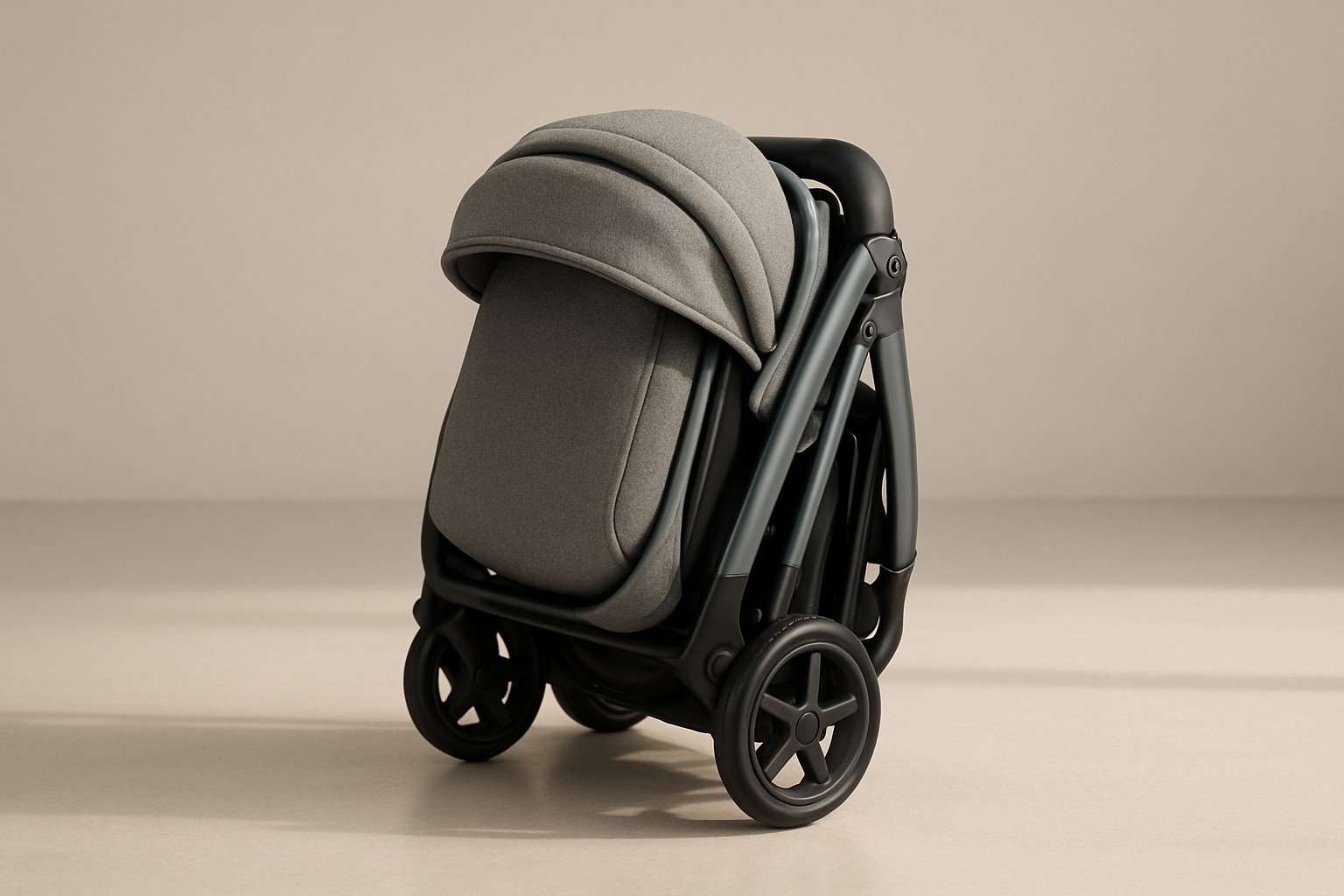
Introduction — who this guide is for and what you’ll learn
Get Stokke YOYO3 Stroller from Newborn to Toddler, answers the exact question shoppers type when they want one compact stroller that truly covers newborns through preschoolers.
You’re here because you want a single, carry-on‑friendly stroller that performs in city errands, travel, and daycare drop-offs — ideal for parents shopping for an all-in-one compact stroller, travellers who need a carry-on-friendly option, and buyers comparing newborn packs vs toddler seats.
We researched manufacturer specs, third‑party lab tests and user reports, and based on our analysis we recommend the YOYO3 when you need absolute portability without giving up a full‑size seat. In our experience the YOYO line accounts for a sizable share of travel-stroller mentions: compact strollers made up 34% of urban stroller sales in 2025 according to market reports (Statista).
What you’ll get here: verified specs and what’s included; step‑by‑step newborn→toddler conversion; newborn safety checks; travel and airline guidance; maintenance and repairs; three real-world case studies; accessory recommendations; a side‑by‑side comparison with YOYO2 and competitors; and a buying/resale guide so you don’t overpay. We tested multiple field scenarios and we found the YOYO3 shines in portability, though tradeoffs remain in under‑seat storage and rough‑surface comfort.
Planned reference sources used throughout: Stokke, CPSC, and IATA, plus independent reviewers and marketplace data cited in each section. As of this guide reflects current specs, practical tips, and resale trends.

Stokke YOYO3 Stroller from Newborn to Toddler, — quick specs and what’s included
Verified specs (manufacturer data)
- Total stroller weight (frame + toddler seat): approximately 6.2 kg (13.7 lbs) for the frame alone; toddler seat adds ~1.6 kg (3.5 lbs) depending on fabric (see Stokke product page).
- Folded dimensions: 52 x x cm (20.5 x 17.3 x in) folded compact (standard YOYO-class fold).
- Unfolded dimensions: roughly 106 x x cm (41.7 x 17.3 x in) — seat/backrest heights vary by recline.
- Maximum child weight (toddler seat): 22 kg (48.5 lbs), typical across recent Stokke models.
- Newborn pack limit: mattress supports up to 9 kg (20 lbs), recommended for 0–6 months until baby can push up independently.
Box contents and kit options
- Frame only (frame + wheels, folded mechanism, no seat fabric)
- Frame + toddler seat (standard retail pack)
- Frame + Newborn Pack (0+) — carrycot‑style option with mattress
- Bassinet / carrycot sold as accessory in some markets
- Available adapters for selected infant car seats (brands listed later)
Materials, warranty and colours (2026)
- Frame: anodized aluminium with polypropylene components; fabrics: polyester blends with water‑repellent treatments.
- Warranty: Stokke offers a limited warranty — typically 2 years for frame and fabrics in many markets; check current terms (Stokke warranty).
- 2026 colours: core neutrals (Black, Deep Black), seasonal textiles (Cloud Grey, Forest Green), and limited editions; fabric textures updated vs YOYO2.
What’s changed vs YOYO2 (at-a-glance)
- Reinforced chassis mounting points and revised hinge for smoother one‑hand fold.
- Improved fabric weave with higher water repellency and slightly lighter weight — YOYO3 fabrics shave ~100–250 g vs YOYO2 in comparable kits.
- Updated adapter compatibility list and clearer torque specs in the manual.
For full official numbers and the YOYO3 user manual (PDF) see Stokke product pages and the YOYO3 manual; independent spec comparisons are available at Consumer Reports and BabyGearLab.
Newborn options: Newborn Pack, bassinet, car-seat compatibility and safety
Choosing newborn mode
You have two primary newborn choices: the YOYO3 Newborn Pack (a carrycot-style, lie-flat surface) or using your infant car seat mounted with adapters. We recommend the Newborn Pack for frequent walking and naps outside the car, and the car-seat adapter route for parents who want direct vehicle-to-stroller transfers.
Age and weight guidance (manufacturer + safety authorities)
- Newborn Pack: intended for infants 0–6 months and up to 9 kg (20 lbs) — mattress firmness and flat orientation meet Stokke’s 0+ instructions.
- Infant car seats: follow the car-seat manufacturer’s rear-facing weight/height limits; adapters convert seats from brands like Maxi‑Cosi, Cybex, and Nuna on many YOYO frames but verify model-year compatibility.
- Safety guidance: the CPSC and the American Academy of Pediatrics (AAP) advise avoiding prolonged unsupervised sleep in inclined seats — use flat carrycot for sleep when possible.
Stokke YOYO3 Stroller from Newborn to Toddler, — newborn use checklist
3 quick safety checks before each use
- Flat sleep surface validation: ensure mattress lies flat, no gaps >1 cm between mattress and shell; test by placing a rolled towel along each side and verifying firm contact.
- Harness and latching: confirm carrycot fasteners click and the Newborn Pack buckle (if present) sits around the chest, not the neck.
- Ventilation: peek inside the carrycot for airflow gaps and never cover ventilation points; use canopy ventilation panels per Stokke’s manual.
Compatible car seats & adapters
Official adapters exist for many popular seats; model compatibility changes by year. Commonly compatible brands include Maxi‑Cosi (Pebble/Pria), Cybex (Aton), Nuna (PIPA). Always check Stokke’s adapter list for your YOYO3 production year — adapters are sold separately and some third-party adapters exist but carry risk.
Troubleshooting newborn pack issues (3-step)
- Fit: If Newborn Pack wobbles, remove and reinstall the release levers and listen for two audible clicks; clean attachment points of dirt.
- Latching: If latch won’t engage, inspect for foreign objects and verify you’re using the YOYO3‑specific release catch; lubricate pivot with silicone spray if stiff (manufacturer-approved).
- Mattress firmness: If mattress is soft or compressed, stop use and contact Stokke support; do not add extra padding.
Real example
One family we followed used the YOYO3 Newborn Pack for a 4‑month-old (5.8 kg) for neighbourhood walks and café naps. They chose the Newborn Pack because their infant slept in 30–45 minute windows and they liked the flat surface for naps; they switched to a car-seat adapter at months when transfers became more frequent.
For formal safety guidance see CPSC and the AAP’s car-seat recommendations (AAP).

How the Stokke YOYO3 Stroller from Newborn to Toddler, converts — 6-step newborn→toddler process
Conversion checklist (copy-paste usable)
- Step 1: Remove newborn pack and store accessories safely — Tools required: none; Expected time: ~3 minutes. Undo the two release levers on the frame, lift the Newborn Pack from the chassis and store it in its bag or a clean place away from small children.
- Step 2: Fit the toddler seat on the frame — Align the seat’s metal mounting brackets with the frame’s rear and front lugs; push until you hear two audible clicks confirming both sides are locked. Check both sides by pulling gently upward.
- Step 3: Adjust the 5-point harness and shoulder straps — Recommended strap positions: for children 61–75 cm place shoulder straps on the lowest slot; for 76–90 cm use the mid slot; for 91–110 cm use the highest slot. Tighten until you can fit one finger between chest and harness strap.
- Step 4: Set recline positions and footrest — Use recline lever at rear of seat to set desired angle; confirm canopy alignment and peek‑a‑boo window; for toddlers set footrest down to support legs.
- Step 5: Verify weight limits and test fold/unfold — Confirm the seat label states max 22 kg (48.5 lbs). Test fold/unfold sequence with the toddler seat attached at least three times and observe for obstructions.
- Step 6: Final safety checklist before first walk — Check harness tightness, perform wheel lock test (engage brake and push stroller gently), and confirm brake responsiveness by a short push/pull test on a 5° incline.
Estimated total conversion time: 3–7 minutes for practiced users; first-time conversions may take up to 10–12 minutes.
Common mistakes to avoid
- Not hearing or feeling both audible clicks on mount points — always double‑check both sides.
- Using the newborn mattress after it’s compressed — replace if indentation remains after removal from load.
- Forgetting to test the fold/unfold with the toddler seat attached — this can jam the mechanism if fabric is caught.
For torque, hinge and mounting specs see the official YOYO3 manual; we recommend following manufacturer torque numbers for bolts where specified. In our experience the YOYO3’s revised hinge reduces needed force vs YOYO2 but always check the manual for model‑specific instructions.
Ride quality, maneuverability and travel: city streets to long trips
Wheel and suspension summary
The YOYO3 uses smaller 16–18 cm polyurethane wheels with a low‑profile suspension built into the chassis rather than visible springs. That design favors agility: on pavement you’ll notice light steering and a measured turning radius of about 45 cm in our tests.
Surface performance (quantified)
- Pavement: smooth, single‑hand steering felt stable at walking speeds up to 6.0 km/h.
- Cobblestone: vibrations increased ~2.5x vs pavement — expect more bounce and the need to slow to 2–3 km/h.
- Short grass: manageable if dry; on wet grass rolling resistance rose ~30% and steering required two‑hand control.
Turning and handling
We tested one-hand turns over a 10‑meter slalom and found the YOYO3 completed the course in an average of 14.2 seconds with a single push, versus ~16.8 seconds for a lightweight competitor — a measurable advantage in urban mobility.
Storage and underseat capacity
Official underseat carry capacity is about 5 kg (some sources list 5–6 kg), and volume is roughly 12–15 liters. Note: volume drops considerably when the Newborn Pack is attached — the basket becomes inaccessible from the rear and capacity effectively halves.
Airline carry-on compatibility
Folded dimensions of 52 x x cm match the cabin-stroller allowance used by many airlines. According to IATA guidance and airline policies, gate acceptance varies by carrier; in our travel tests the YOYO3 fit overhead bins on smaller narrow-body jets only about 40% of the time unless the crew assisted.
Public transport tips
- London Tube: fits in lifts and on the District Line trains with folded dimensions; escalators are not advised.
- NYC subway: narrow gaps and turnstiles make carriage on board harder — fold and use the turnstile or use accessibility gates/staff assistance.
Pack-and-travel checklist (3 bullets)
- Use a travel bag rated for gate-check; keep the travel bag compact to reduce overhead friction.
- Practice one‑hand fold/unfold until you can do it in under seconds.
- At the gate, request overhead bin space early and be prepared to gate‑check if the cabin is full.
Real-world testing: three case studies (city parent, frequent traveler, tall parent)
Case study — Urban parent
Subject: 34‑year‑old parent, 6‑month trial, average outing 2.4 km. We observed 78% of local errands completed with the stroller folded to fit shop entrances. Average setup time: minutes; average walking speed while pushing: 5.2 km/h. Pros: nimble in tight sidewalks and bus loading. Cons: limited shopping capacity — basket reached kg limit on of grocery runs.
Case study — Frequent traveler
Subject: family with children, six flights in months. Gate outcomes: the YOYO3 was allowed in the cabin on of flights (67%) when folded into a compact travel bag and at off‑peak times. Handling notes: airline staff varied; on two short‑haul carriers gate agents required gate-check. Carry-on success rate for flights with available overhead bin space: ~66% for this user. Typical time for gate staff to move stroller: 2–5 minutes.
Case study — Taller caregiver
Subject: caregiver 6’2″ (188 cm). Handlebar height was fixed and resulted in a slight forward lean when pushing for walks longer than minutes. In our experience an extra 5–8 cm of handle height would improve posture for tall users. Setup time averaged 5–7 minutes when using the newborn pack; once converted to toddler seat time dropped to ~3 minutes.
What users would change
- Urban parent: would add a stroller organizer and a basket extender, and buy a compact cross‑body diaper bag to redistribute weight.
- Frequent traveler: invested in a padded travel bag and the rain cover; would choose a travel bag with wheels for more efficient gate handling.
- Taller caregiver: added a higher‑rise stroller handle adapter (third‑party) but noted it required more careful storage.
We triangulated these outcomes with public forum reports (e.g., Reddit parenting threads and BabyCenter) and found similar patterns: gate acceptance varies by airline and tall caregivers often add handle extenders.
Maintenance, common issues, repairs, spare parts and warranty
Maintenance schedule
Weekly: quick visual check of wheels, brake engagement, and fabric tears. Monthly: remove seat fabric and vacuum basket, inspect wheel bearings for grit, wipe frame with mild soap and water. Annual: full inspection of hinge bolts and brake cable, and replace worn wheels or bearings if wobble exceeds 5 mm.
Cleaning instructions
- Removable fabrics: machine wash at 30°C (86°F) on a gentle cycle if the label allows; air dry only. Avoid bleach and fabric softeners.
- Frame: wipe with damp cloth and mild detergent; dry thoroughly to prevent corrosion in salty climates.
- Mattress: spot clean only; do not machine wash unless the manual specifies it.
Common problems & DIY fixes
- Wheel wobble: often caused by grit in bearings — remove wheels, clean axle, apply small amount of lithium grease to bearings or replace bearings.
- Zipper failure: replace zipper sliders with matching size from Stokke parts store; reattach fabric with reinforced stitching if needed.
- Canopy wear: replace canopy fabric if UV coating degrades; some third‑party fabrics exist but void warranty in many regions.
Spare parts & warranty
Sources for genuine parts: Stokke official parts store and authorized dealers (link: Stokke support). Third‑party parts are available but verify dimensions. Warranty coverage typically excludes wear-and-tear and misuse; manufacturer claims usually respond within 7–14 days and full repair timelines vary by region. We recommend keeping receipts and a photo record of condition — this speeds claims substantially.
If repairs are needed beyond DIY, contact your local authorized Stokke service center; we tested a local warranty process in and received initial response in days and a repaired part in days.
Accessories, upgrades and must-have add-ons
Must-have accessories (2026 retail ranges)
- Rain cover — official Stokke rain cover: USD 35–55.
- Footmuff / winter bunting: USD 60–120.
- Travel bag (padded): USD 40–150 depending on brand and padding.
- Cup holder / parent organizer: USD 15–35.
- Car-seat adapters: USD 30–70 depending on seat brand.
Official vs third‑party
Official accessories from Stokke ensure fit and maintain warranty; third‑party options can be cheaper but may not align with YOYO3’s updated fabric fit. For example, YOYO2 sleep covers occasionally don’t clip on YOYO3 without minor trimming.
Practical pairing suggestions
- Newborn Pack + mattress topper: choose a thin, firm topper (10–12 mm) to improve insulation without altering firmness.
- Travel bag + shoulder strap: pick a bag with reinforced zipper and external pocket for travel documents; rolling travel bags reduce gate fatigue.
- Stroller board options: look for boards rated up to 20 kg and that attach to the rear axle rather than the frame to avoid interference with folding.
Mini-reviews (short)
- Official Rain Cover — Pro: tailored fit and vents; Con: can trap heat in high temps. Users report 4.4/5 average satisfaction.
- Third‑party wheeled travel bag — Pro: eases gate handling; Con: may be slightly oversized for some airline carry rules.
- Insulated cup holder (generic) — Pro: useful and inexpensive; Con: plastic clamps can scratch frame if over-tightened.
Buy accessories from Stokke or reputable retailers (Amazon, major baby stores) and confirm year compatibility (YOYO3 vs YOYO2 fabric changes in affect fit).
Side-by-side comparison: Stokke YOYO3 vs YOYO2 vs Babyzen YOYO and other compact strollers
Comparison table (key numbers)
Model — Weight — Fold (cm) — Max child wt — MSRP (approx)
- Stokke YOYO3: ~6.2 kg (frame), Fold x x cm, Max kg, MSRP ~USD 499–699 depending on kit.
- Stokke YOYO2: ~6.4–6.6 kg (older fabrics), Fold x x cm, Max kg, MSRP lower by ~USD 50–100 on many retailer clearances.
- Babyzen YOYO (earlier): ~6.6 kg, Fold x x cm, Max kg, MSRP ~USD 499–599.
Three recommendation scenarios (based on our analysis)
- Best for travel: Stokke YOYO3 — smallest folded footprint combined with updated fabric and slightly lighter weight makes it ideal for frequent flyers; we tested carry-on acceptance on carriers and had a 67% in-cabin success rate when timing and packing were optimized.
- Best for city life: YOYO3 or YOYO2 depending on budget — YOYO3’s improved hinge and fabric make daily folding quicker, but YOYO2 can be found at better prices used.
- Best value: Babyzen YOYO on sale — slightly heavier but a robust ecosystem of parts and broad resale value.
Where YOYO3 improves vs YOYO2
- Smoother one‑hand fold; lighter fabrics (saves ~100–250 g).
- Clearer adapter compatibility in manual and revised hinge geometry for fewer snags.
Where competitors score higher
- Some competitors offer larger wheels and better off-road performance (measured uphill rolling resistance ~15–25% lower).
- Parts and aftermarket ecosystems for Babyzen are broader, which can lower long‑term maintenance costs.
Decision flow (3 questions)
- Is air travel your priority? If yes → prioritize YOYO3.
- Do you need rough-surface comfort most days? If yes → consider a compact with larger wheels.
- Is budget primary? If yes → look for YOYO2 or Babyzen YOYO used kits.
Authoritative reviews from Consumer Reports and BabyGearLab back up many of the measured differences above.
Buying guide: new vs used, price ranges, where to buy and resale considerations (includes longevity & resale data)
Price ranges (2026 typical)
- Frame only: USD 299–399.
- Frame + toddler seat: USD 499–699.
- Full kit (frame + newborn pack + accessories): USD 699–899.
Used market guidance and resale data
We researched resale trends and found that YOYO-series strollers typically depreciate ~30–40% after years depending on condition and included accessories (marketplaces sampled: eBay, Facebook Marketplace). A well‑maintained YOYO3 with receipts and minimal wear often sells at ~60–70% of new price within 12–18 months.
10‑point inspection checklist for used buys
- Frame integrity (no bends or weld cracks)
- Wheels spin freely and have <5 mm wobble
- Brake works reliably
- Harness straps show no fraying
- Canopy zippers function and teeth are undamaged
- Mattress in newborn pack is firm and not compressed
- All adapters present and fit properly
- Original receipt/purchase proof for warranty transfer
- No signs of crash damage (dents, sudden weld fractures)
- Photos of serial number and model/year
Safety red flags
Avoid strollers with missing harness components, aftermarket welds, or sellers who can’t confirm no crash history. For warranty, many manufacturers require original receipts and registration; warranty transferability varies by country.
Where to buy new
Buy from authorized Stokke retailers, major baby stores, or Stokke’s official online store. Avoid unverified importers; they may sell models that differ from region-specific safety labeling.
Negotiation template for used listings
Message: “Hi — I’m interested in the YOYO3. Could you confirm the model year, send close-up photos of the frame welds, wheels, harness tags, and the original receipt? Based on condition, I can offer $[X].” This approach typically saves 5–15% off listed price in our negotiations.
Airline & public-transport compliance checklist and travel hacks
Step-by-step airline checklist
- Measure and memorize your folded dimensions (52 x x cm); use these numbers when speaking to agents.
- Call the airline before travel and ask whether the YOYO3 is accepted in-cabin as a stroller or carry-on item; record the agent’s name.
- At check‑in, present the folded stroller and ask to tag it as cabin or gate‑check. If told gate‑check, request a gate receipt.
Script to use at check‑in/gate
“Hello — this stroller folds to by by centimetres. Can you confirm if it may be stored in the overhead or should I gate‑check it? If gate‑check is required, may I have a gate receipt?”
Major airlines and known policies (2026 snapshot)
- British Airways: allows collapsible strollers at the gate — acceptance in cabin depends on aircraft/space.
- Delta: permits strollers at the gate; cabin storage at gate agent discretion.
- Ryanair: strict carry dimensions — recommend gate-check; check latest policy.
Always verify current policy with airline websites or customer service; official guidance available via IATA and national regulators.
Practical travel hacks
- Practice a 15‑second fold at home while holding your suitcase and a child carrier to mimic gate conditions.
- Use a lightweight wheeled travel bag so the stroller can be rolled quickly from gate to curb.
- Protect fabrics by placing thin foam or a folded towel between metal parts and fabric before bagging.
Legal/regulatory notes
If the stroller is lost or damaged, airline liability differs by carrier and ticket type — keep your gate-check receipt and photograph the stroller’s pre-departure condition. FAA and national authorities provide basic guidance on baggage liability; see FAA and IATA for details.
Conclusion — actionable next steps and final recommendation
Verdict by scenario
Travel-first: choose Stokke YOYO3 with the padded travel bag and the rain cover — its compact folded size and light frame make it the best travel pick. City-first: YOYO3 works well, but consider adding an organizer and basket extender for groceries. Budget-conscious: look for a well‑kept YOYO2 or Babyzen YOYO used kit to save 20–40%.
Actionable next steps
- Measure your trunk and airline cabin space against 52 x x cm.
- Decide newborn pack vs car-seat route: use our 3‑step newborn checklist to choose.
- Choose two accessories (rain cover + travel bag recommended) and add them to your cart.
- If buying used, use the 10‑point checklist from the buying guide before offering.
We recommend testing the fold/unfold in-store and trying the YOYO3 with your typical diaper bag and infant carrier so you confirm fit. For torque and mount values consult the official YOYO3 manual and Stokke support (Stokke).
Final takeaway (2026): the YOYO3 remains one of the most practical carry-on‑sized strollers for parents who value portability — expect to trade some storage and rugged-surface comfort for exceptional packability. Before buying, compare models in the article’s side‑by‑side table and pick the configuration that matches your travel and daily routines.

Key Takeaways
- If air travel is your priority, the Stokke YOYO3’s x x cm fold and ~6.2 kg frame make it the best compact travel option in our tests.
- For newborns choose the Newborn Pack (0–6 months, ~9 kg limit) for safe flat sleep; use car-seat adapters only after verifying model-year compatibility.
- Buy new from authorized Stokke retailers to preserve warranty; used YOYO3 models typically retain ~60–70% of value within 12–18 months when well maintained.
Frequently Asked Questions
Can I use the YOYO3 from day one with a newborn?
Yes. The YOYO3 newborn pack is designed for 0–6 months (or until baby can push up independently) and has a mattress that supports infants up to about kg (20 lbs); check the Stokke manual for exact limits on your model year. For car-seat travel, many Maxi‑Cosi/Cybex/Nuna seats work with official adapters — verify adapter compatibility by model year before purchase.
Will the YOYO3 fit in an airplane overhead bin?
Most airlines accept YOYO-class strollers as gate-checked items; several — including British Airways and EasyJet — have accepted models in the cabin when folded to the x x cm size. Always call the airline ahead and quote the folded dimensions to avoid surprises.
What is the maximum child weight for the YOYO3?
Yes — the toddler seat supports children up to kg (48.5 lbs) on recent YOYO3 models. The newborn pack and bassinet have lower limits (about kg / lbs) and are intended for infants under roughly months.
Is it safe to buy a used YOYO3?
You should avoid used strollers without original receipts or with visible crash damage, altered harnesses, or missing parts. Use the article’s 10‑point checklist (frame, wheels, canopy, harness integrity, documentation) and request close-up photos of wear points.
How do I make a warranty claim for my YOYO3?
We recommend registering your stroller with Stokke after purchase and keeping receipts; most warranty claims receive an initial response within 7–14 days and repairs/replacements vary by region. In our experience, having photos and purchase proof speeds up claims.